


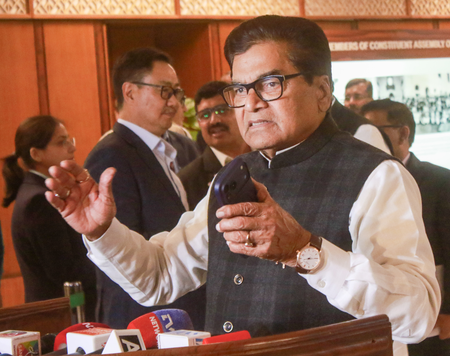
Samajwadi Party leader Ram Gopal Yadav criticized the 20 Trinamool MPs who joined the Nationalist Citizens Party of India (NCPI), accusing them of betraying Mamata Banerjee. He expressed disappointment, stating that those who were once uplifted by Banerjee were now turning against her.
Yadav also took aim at the Bharatiya Janata Party, raising concerns about broader institutional and constitutional issues. He claimed that the BJP’s actions were not just about weakening regional parties but also about undermining the Constitution and fostering division within the country.
The dissent within the Trinamool ranks has led to a potential alignment with the BJP-led National Democratic Alliance (NDA). Rebel MP Satabdi Roy, after discussions in New Delhi, hinted at the group’s future political direction, indicating a leaning towards the NDA.
The rebellion initially seen in the West Bengal Assembly has now spilled over into Parliament, with dissident MPs asserting the support of over 20 Lok Sabha members. This internal turmoil poses a significant challenge to the Trinamool Congress post the Assembly elections, with the rift widening from the state to the national level.
Trinamool’s response to the rebel MPs’ decision to merge with the NCPI has been critical, labeling it as “ridiculous” and accusing the breakaway faction of disrupting party unity. Meanwhile, the NCPI, aligning with the NDA’s political agenda, has maintained a distinct organizational identity.
