


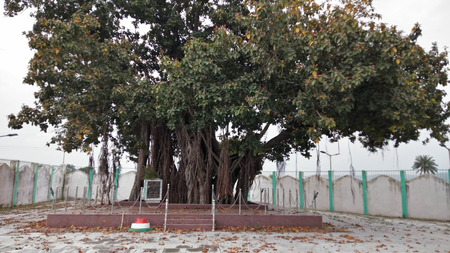
The banyan tree at Pachkatia in Jharkhand’s Sahibganj district holds historical significance as the site of the Santhal Hul rebellion 171 years ago. On June 30, 1855, tribal leaders initiated a revolt against British rule, marking India’s first organized freedom struggle. Thousands are expected to gather in Bhognadih to honor the movement’s martyrs, emphasizing its enduring importance in Jharkhand’s history.
Hul Diwas, observed as a symbol of tribal pride and resistance, remains a powerful event in Jharkhand, particularly at Bhognadih, the rebellion’s birthplace. Tribal historians argue that the Santhal Hul was a well-planned mass rebellion with the clear objective of ending British rule and freeing local communities from exploitation. The movement gained international attention, with Karl Marx and London newspapers acknowledging its significance.
The rebellion, led by Sidhu and Kanhu, attracted nearly 20,000 people on June 30, 1855, culminating in a declaration for British withdrawal. Armed with traditional weapons, the rebels posed a formidable challenge to British forces, inflicting heavy losses in battles. The movement showcased remarkable organizational depth, drawing support from various communities and involving over 50,000 participants from around 52 villages.
The British responded to the uprising with extensive military operations, resulting in casualties among the rebel leaders. Sidhu and Kanhu were captured and executed, symbolizing sacrifice and resistance. Despite some recognition in independent India, many feel the Santhal Hul has not received adequate attention in the national freedom movement narrative. As Jharkhand commemorates the rebellion’s anniversary, Bhognadih stands as a place of remembrance and inspiration for future generations in the pursuit of justice and self-determination.
