
Close Menu
  • Indian Festivals 2026
  • Movie & OTT Releases This Week
  • News
  • Entertainment
  • NRI Life
  • Research
  • Advertise with us
Facebook X (Twitter) Instagram YouTube
  • Download Indian Community App
  • Advertise Here
Facebook X (Twitter) Instagram
Indian CommunityIndian Community
Trending
  • Mathe Male Hoyyuthide Review: A Heartfelt Generational Love Story Set in the Rains of Malenadu
  • M4M – Motive for Murder Review: A Gripping Telugu Crime Thriller That Turns Murders into Masterpieces
  • Ankam Attahasam Movie Review (2026): Madhav Suresh’s Gritty Trivandrum Gangster Drama Is a Raw, Riveting Ride
  • Citadel Season 2 Review (2026): Priyanka Chopra, Richard Madden & Stanley Tucci Make This Prime Video Thriller Unmissable
  • Dridam Movie Review: Shane Nigam’s Slow-Burn Cop Drama Is Gripping — Until It Isn’t
  • 29 Movie Review: A Heartfelt Romantic Drama That Blooms in Its Own Time
  • Razor Movie Review (2026): Ravi Babu Delivers a Gripping Survival Thriller
  • Sathi Leelavathi Review (2026): Lavanya Tripathi Shines in This Heartfelt Family Entertainer
  • Indian Festivals 2026
  • News
    • National
    • International
    • Entertainment
    • Achievements
    • Scam Alerts
    • Business
    • Health & Medicine
    • Science & Technology
    • Sports
  • Entertainment
  • Latest Movie Releases
    • Latest OTT Releases
  • NRI Life
  • India & Culture
  • Health & Wellness
  • Research
Indian CommunityIndian Community
Home » News » Business
Business

Science-Policy Coordination Vital for India’s Development Vision

Indian Community Editorial TeamBy Indian Community Editorial TeamFebruary 28, 20262 Mins ReadNo Comments Add us to Google Preferred Sources
Science-Policy Coordination Vital for India’s Development Vision
Share
Facebook Twitter LinkedIn Pinterest Email

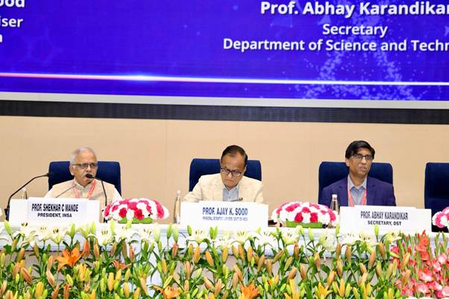
Strong coordination between science and policymaking is crucial for realizing the vision of Viksit Bharat, as emphasized by Prof. Ajay K. Sood, the Principal Scientific Adviser to the Indian Government. Speaking at the National Science Day Celebration–2026 at Vigyan Bhawan, he highlighted the importance of sectors like aerospace, defense, critical metals, advanced materials, and digital communication requiring coordinated efforts and sustained research funding.

Prof. Sood stressed the significant role of the science-policy interface in converting scientific strength into national capability. He emphasized the necessity of integrated approaches in emerging and strategic areas, advocating for synergy among research, innovation, and policy frameworks. India’s future growth, according to him, hinges on developing indigenous technological capacity, fostering interdisciplinary collaboration, and effectively utilizing research outcomes for societal welfare.

Furthermore, Prof. Sood underscored the importance of communicating science in Indian languages to enhance public engagement and inclusivity. Prof. Abhay Karandikar, Secretary of the Department of Science and Technology (DST), highlighted the need for India’s science policy to support cutting-edge research and innovation that can be practically applied. He emphasized DST’s commitment to bolstering interdisciplinary research, institutional collaborations, and capacity building in emerging technologies.

Prof. Karandikar also emphasized the necessity of ensuring that scientific discoveries from laboratories reach the ground efficiently. He stressed the empowerment of researchers, particularly women scientists, and the creation of inclusive research ecosystems to drive sustained national progress. Policy measures, he added, should accelerate innovation while ensuring equitable access to scientific advancements across regions and sectors.

During a panel discussion, Prof. Shekhar C. Mande, President of the Indian National Science Academy, highlighted the importance of regular dialogue between scientists and policymakers. He emphasized that evidence-based policymaking should be informed by robust scientific research and expertise, with closer academia-government cooperation being crucial for achieving Viksit Bharat. The event convened policymakers, scientists, researchers, and academicians to explore how India’s scientific ecosystem can better align with national development goals.

Abhay Karandikar Ajay K. Sood Department of Science and Technology Emerging Technologies India Indian National Science Academy Innovation Interdisciplinary Collaboration National Development National Science Day Policy Measures Research Funding Science Communication Science-Policy Interface Scientific Advancements Shekhar C. Mande Vigyan Bhawan Viksit Bharat Women Scientists
Add us to Google Preferred Sources
Indian Community Editorial Team

The Indian Community Editorial Team curates, verifies, and publishes stories that matter to Indians worldwide. From culture and community to business and innovation, our mission is to spotlight voices, ideas, and events that bring our global community closer together. Have news or a story to share? Submit it to us at [email protected].

Related Posts

India-EU and India-UK Free Trade Agreements: What They Really Mean for Indian Immigration

Canada PR for Indians 2026: 4 Critical Steps to Secure Permanent Residency Through Express Entry

H-1B Visa Interview Appointments for Indians Pushed to 2027: What You Need to Know Now

Add A Comment

Reilly Opelka Questions Tennis Prize-Money Allocation

May 10, 2026

Pakistan Urged to Implement Structural Tax Reforms for Economic Growth

May 10, 2026

Pakistan’s Human Rights Commission Condemns Forced Expulsion of Afghan Migrants

May 10, 2026

Sri Sri Ravi Shankar Praises India’s Transformation Under Modi Government

May 10, 2026
  • Facebook
  • Twitter
  • Pinterest
  • Instagram
About Us
  • About Us
  • Contact Us
  • Terms of Service
Corporate
  • Download Indian Community App
  • Advertise Here
Facebook X (Twitter) Instagram
  • About Us
  • Contact Us
  • Terms of Service
© 2026 Designed by CreativeMerchants.

Type above and press Enter to search. Press Esc to cancel.