


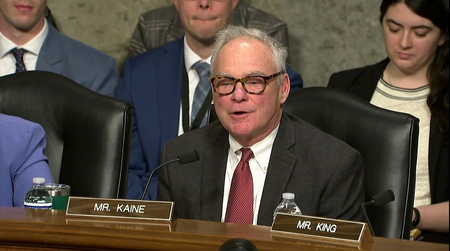
Senate Democrats have intensified their criticism of President Donald Trump’s actions in Iran, labeling the conflict as illegal, expensive, and unconstitutional. Senator Tim Kaine, a member of key committees, highlighted the lack of congressional authorization for the war and its escalating costs domestically and internationally. Kaine emphasized the unpopularity of the war, stressing the need for public testimony from top administration officials.
During a Senate Armed Services Committee hearing, Kaine asserted the illegality of the war, citing the Constitution’s requirement for Congress to declare war. He criticized the President for expanding military actions globally without congressional approval, leading to a situation where the US is engaged in conflicts without proper oversight. Kaine expressed concerns over the unchecked authority of the President in initiating military actions.
In response to the blocked War Powers Resolution, Kaine and other senators, including Cory Booker, Chris Murphy, and Adam Schiff, have filed additional resolutions to address the ongoing conflict. They have called for public hearings with Secretary of State Marco Rubio and Defense Secretary Pete Hegseth to provide transparency on the war’s impact and costs. The senators emphasized the need for accountability and public debate on the escalating situation.
The debate over the war has extended to its financial implications, with Senator Elizabeth Warren questioning the expected $50 billion request for the conflict. Warren highlighted the significant costs of the war, emphasizing the potential alternative uses of such funds, like improving healthcare. The uncertainty surrounding the total cost of the war and its long-term effects has raised concerns among lawmakers about the prioritization of military spending over domestic needs.
Outside Washington, anti-war sentiments have gained momentum, with Congressman Mike Thompson leading “No Forever Wars” events in California. Thompson and other participants have voiced concerns over the human and financial toll of the unauthorized war in Iran, urging for a reevaluation of US military engagements. The ongoing debate underscores the constitutional responsibilities of Congress in overseeing military actions and the need for public discourse on critical national security decisions.
