


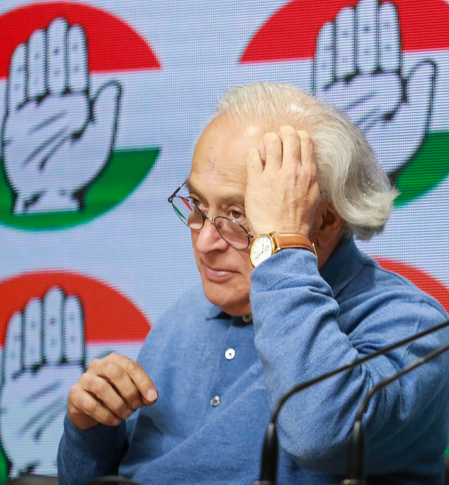
Senior Congress leader and Rajya Sabha member Jairam Ramesh criticized the National Council of Educational Research and Training (NCERT) for including critical references to the judiciary in its textbooks. Reacting to the Supreme Court’s concerns, Ramesh labeled the decade-long textbook revisions as “disgraceful” and “dangerous.” He accused the rewriting process of being an “RSS-driven exercise full of mischief and malice.”
The Supreme Court expressed strong disapproval towards the NCERT for mentioning “corruption in the judiciary” in a Class 8 Social Science textbook. The court viewed this as a deliberate attempt that has negatively impacted the judiciary’s reputation. The Bench, led by Chief Justice of India Surya Kant, issued immediate directives, including seizing the textbook nationwide, removing digital copies, and banning its publication and circulation.
Highlighting concerns over the textbook’s content, the apex court emphasized the need to respect the judiciary’s role and contributions. It pointed out the importance of acknowledging the institution’s historical significance in upholding constitutional values and ensuring access to justice. The court warned that allowing such narratives to go unchecked could undermine public trust in the judiciary.
The Supreme Court, led by CJI Surya Kant, instructed the Education Ministry and NCERT Director Dr. Dinesh Prasad Saklani to explain why action under the Contempt of Courts Act should not be taken against them for the controversial chapter. The court mandated the immediate removal of all physical and digital copies of the textbook from schools, retail outlets, and online platforms, holding NCERT and school authorities personally accountable for compliance.
