


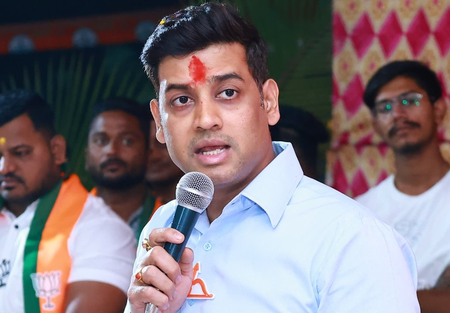
In a recent development, Shrikant Shinde, the son of Shiv Sena MP and Deputy Chief Minister Eknath Shinde, has openly criticized the BJP for forming local alliances with the AIMIM and the Congress. Shinde expressed disappointment over what he called “ideological compromises” made by the BJP, particularly in forming the “Akot Vikas Manch” with AIMIM in Akola and aligning with the Congress in Ambernath to gain control in municipal councils. He questioned the BJP’s shift from their campaign slogan “Batenge toh Katenge” (Divided we fall) to forming alliances that seem contradictory to their Hindutva principles.
Shrikant Shinde highlighted the discomfort felt by those who uphold Hindutva values, especially in Ambernath where the BJP joined hands with the Congress, sidelining the Shiv Sena. He criticized the BJP for what he sees as betraying the Mahayuti coalition’s spirit by forming what he termed as “unnatural” alliances solely for local power gains. Shinde warned that such moves could confuse voters and undermine the alliance’s credibility ahead of the crucial BMC elections.
The recent outburst by Shrikant Shinde comes in response to the BJP’s establishment of the ‘Akot Vikas Manch,’ in collaboration with MIM, which now holds a significant majority in a local council. Despite the Shiv Sena’s strong presence in the Ambernath Municipal Council, the BJP managed to secure the President’s position by forging unexpected partnerships. This situation has brought to light a growing conflict between the BJP and local allies like the Shiv Sena, with differing views on the nature of these alliances and their implications on electoral dynamics.
Observers note a brewing tension between the BJP and Shiv Sena, characterized by a clash between the “big brother” and “local ally” roles, particularly in municipal politics. While the BJP defends these alliances as strategic adjustments based on numbers rather than ideology, the Shinde faction perceives them as a direct challenge to their influence in specific municipal territories. This internal discord could potentially impact the dynamics between the two parties, especially as they vie for support from voters aligned with “pro-Hindutva” and “pro-development” ideologies.
