


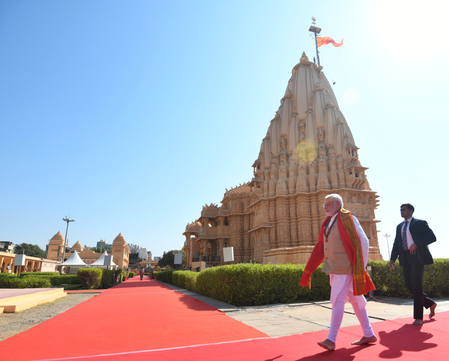
Somnath Temple, the first among the 12 Jyotirlingas of Lord Shiva, is gearing up to commemorate 75 years since its reopening in independent India. Prime Minister Narendra Modi is scheduled to visit the shrine on May 11 as part of the ‘Somnath Amrut Mahotsav’ celebrations. The temple, located in Gujarat’s Saurashtra region, holds a significant place in Hindu religious tradition and is associated with the worship of Lord Shiva, Lord Krishna, and Shakti traditions.
The history of Somnath Temple dates back to 1,000 years, with the first recorded attack in 1026. The ceremonial reopening of the temple on May 11, 1951, by India’s first President, Dr Rajendra Prasad, marked a pivotal moment in its journey. Over the centuries, the temple has faced cycles of destruction and reconstruction, symbolizing resilience and revival in the face of challenges.
The temple’s reconstruction post-Independence, supported by leaders like Sardar Vallabhbhai Patel, signifies a restoration of national confidence and cultural continuity. The present temple, consecrated in 1951, stands as a testament to India’s spiritual and civilizational heritage. Prime Minister Modi, set to participate in the anniversary ceremonies, views Somnath as a symbol of India’s enduring spirit and emphasizes the importance of heritage preservation along with development.
The commemorative events at Somnath Temple aim to honor its history of destruction and revival, reflecting a broader civilizational resurgence in post-Independence India. The temple’s rich legacy, intertwined with stories of valor and devotion, continues to attract millions of pilgrims annually. With cultural initiatives, sustainability efforts, and community welfare programs, Somnath remains a beacon of religious tourism and heritage preservation in India.
