


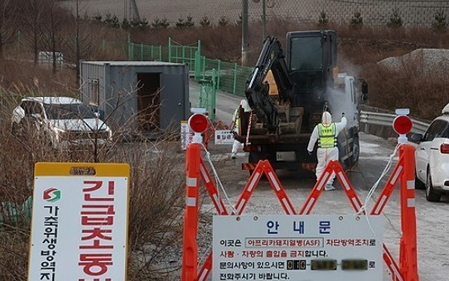
South Korea has confirmed its first case of African swine fever (ASF) in about two months, leading to the culling of thousands of pigs and the implementation of a standstill order to contain the virus. The outbreak was identified at a farm in Gangneung, located 170 kilometers east of Seoul in Gangwon Province, where 29 out of 32 deceased pigs tested positive for the virus. While ASF is lethal to pigs, it poses no threat to humans.
Prime Minister Kim Min-seok has directed urgent containment actions, such as restricting access to the site and conducting culling operations, following the detection of the new case. Emphasizing the importance of a comprehensive epidemiological investigation to determine the outbreak’s cause, Kim is taking proactive measures to control the situation. This incident marks the first confirmed ASF case in South Korea since November, when an outbreak occurred in Dangjin, South Chungcheong Province.
To prevent further transmission, authorities culled 20,000 pigs at the affected farm and imposed a 48-hour standstill order on pig farms in six neighboring cities and counties. In a previous ASF case last year, the country reported an outbreak in Dangjin, South Chungcheong Province, which has a significant swine farming capacity, heightening concerns about a potential nationwide spread. The government responded by culling 1,423 pigs from the affected farm and other nearby farms under the same ownership, along with issuing a nationwide 48-hour standstill order for pig farms and related facilities.
All five previous ASF cases in 2025 were concentrated in the northern part of Gyeonggi Province.
