


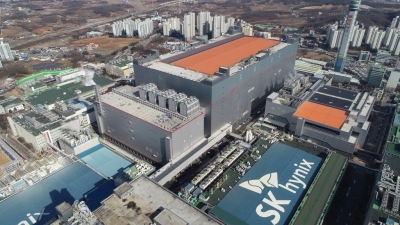
With global economic uncertainties expected to continue affecting South Korea in 2026, the country plans to utilize its semiconductor industry to navigate challenges amidst the global artificial intelligence (AI) surge. Earlier this year, the South Korean economy faced instability due to protectionism measures announced by U.S. President Donald Trump, including tariffs on economic allies.
Following negotiations, Seoul and Washington reached an agreement in November to reduce reciprocal tariffs on South Korean products to 15 percent from 25 percent in exchange for South Korea’s commitment to invest $350 billion in the United States and other pledges. The Bank of Korea revised its 2026 growth outlook to 1.8 percent, up from the previous projection of 1.6 percent, citing a strong upturn in the global semiconductor industry.
The ASEAN+3 Macroeconomic Research Office (AMRO) forecasts South Korea’s economy to expand by 1.9 percent next year, driven by robust exports. South Korea’s exports surged by 8.4 percent in November compared to the previous year, exceeding $61 billion, marking the sixth consecutive month of growth.
Despite positive export trends and economic data, South Korea still faces challenges such as foreign exchange volatility, increased competition from Chinese competitors in major industries, and sluggish growth in domestic sectors. Experts anticipate economic growth of 1.8 percent in 2026, attributing it to the extremely challenging conditions faced this year.
Experts highlight concerns about the construction industry, which contributes over 10 percent to South Korea’s GDP, continuing to weigh down the overall economy. They also mention the weak Korean won, expecting gradual improvement in the future despite the U.S. dollar’s strength in the first quarter of 2026.
