


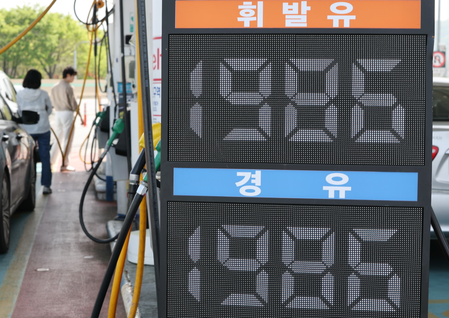
The South Korean government announced that it will keep the current price limits on fuel products unchanged for the next two weeks. This decision is based on international oil prices and measures to control demand. The maximum prices for regular gasoline, diesel, and kerosene supplied to gas stations will remain at 1,934 won, 1,923 won, and 1,530 won per liter, respectively.
This marks the second consecutive time that the government has decided to freeze the price ceilings at their current levels. The government enforces these maximum prices every two weeks as part of a price cap system introduced in mid-March to stabilize domestic fuel prices. The decision to maintain price caps is influenced by the ongoing volatility in the global energy market due to uncertainties like the fragile ceasefire between the United States and Iran.
Global fuel prices have seen a recent decline, with gasoline prices dropping by about 8%, diesel prices by 14%, and kerosene prices by 2%. Despite this, the government is cautious due to uncertainties in the Middle East and the fact that current fuel prices remain high compared to pre-war levels. The government also plans to provide financial compensation to oil refineries for any losses incurred due to the price ceiling system.
On the supply side, the government is ensuring the availability of essential industrial materials, especially for the medical sector. Adequate supplies of IV solution packaging materials, syringes, and medical gloves have been secured to prevent any disruptions. Additionally, there are no supply disruptions reported for key industrial materials used in sectors like semiconductors, automobiles, and shipbuilding, as South Korea has been importing alternative materials like helium and hydrogen bromide.
