


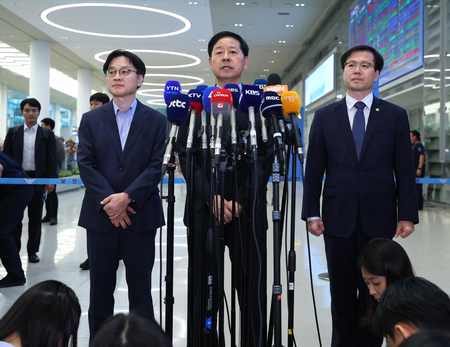
The recent memorandum of understanding (MOU) between Washington and Tehran poses both opportunities and challenges for South Korea, as stated by Finance Minister Koo Yun-cheol during a ministerial meeting on international economic affairs. The government aims to implement post-conflict economic policies focusing on creating long-term opportunities, enhancing economic security, and bolstering supply chain resilience.
Koo emphasized the government’s intention to secure cooperation areas with Middle Eastern nations for reconstruction and fiscal health improvement. Additionally, South Korea plans to address global supply chain risks highlighted by the recent conflict and navigate Washington’s proposed tariffs on countries, including South Korea, over alleged failure to enforce import bans on products made with forced labor.
In response to the proposed tariffs by the U.S. Trade Representative (USTR), Koo highlighted Seoul’s proactive efforts to find a balance that benefits both countries. Despite external uncertainties easing post the U.S.-Iran MOU, South Korea continues to feel the economic impact. The government remains vigilant, monitoring Middle East developments and ensuring the safe passage of South Korean ships through the Strait of Hormuz.
Koo acknowledged the lingering effects of the Middle East conflict on the South Korean economy, including employment slowdowns, consumer price increases, and market volatility. He reassured that the government is committed to alleviating the impact on people’s livelihoods.
