


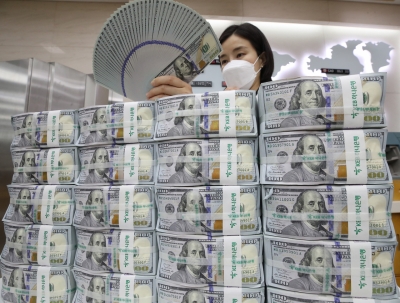
South Korea’s antitrust regulator has fined the country’s four major commercial banks a total of 272 billion won ($183.7 million) for allegedly colluding on real estate lending limits tied to loan-to-value (LTV) ratios. The banks involved in the collusion are Shinhan Bank, Woori Bank, Hana Bank, and KB Kookmin Bank. They are accused of sharing internal documents related to LTV ratios and coordinating their lending limits, which restricted competition in the mortgage loan market, according to the Fair Trade Commission (FTC).
The LTV ratio is a regulatory measure used to control household debt by limiting the amount borrowers can take out in loans based on the value of their property used as collateral. The FTC revealed that the four major banks exchanged detailed information on their LTV ratios between 736 and 7,500 times over an extended period. This information sharing allowed the banks to avoid competition, ensuring stable profits by aligning their business strategies.
Due to the dominance of these major banks, which hold about 60 percent of the real estate mortgage loan market in South Korea, consumers faced limited choices among lenders due to the similarity in LTV ratios. The collusion had a detrimental impact on small and midsized enterprises and small business owners with lower credit ratings, as they heavily rely on secured loans. The banks’ decisions on LTV ratios significantly influence the availability of financing for these borrowers.
This case is significant as it is the first instance of applying a revised fair trade law that prohibits anti-competitive collusion through the exchange of sensitive business information, effective since December 30, 2021.
