


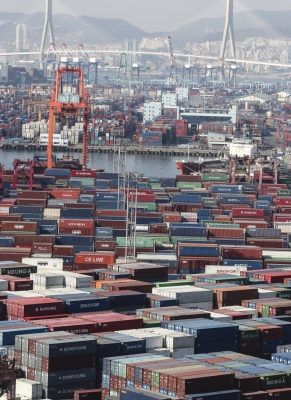
The South Korean economy is forecasted to expand by 2.5% in 2026, driven by robust growth in the semiconductor sector and a recovery in local consumption, as per the Korea Development Institute (KDI). The KDI revised its 2026 growth estimate from 1.9% to 2.5%, citing strong export growth in semiconductors despite challenges like tariff policies.
Domestic consumption is anticipated to rise by 2.2% in 2026, supported by government subsidies, before increasing by 1.5% in 2027, according to the KDI. Additionally, facility investment is expected to grow by 3.3% in 2026 and 2.4% in 2027, primarily led by the semiconductor industry.
Inflation is projected to reach 2.7% in 2026 due to higher crude oil prices, with a subsequent easing to 2.2% in 2027. The KDI forecasts a 1.7% expansion in the economy for 2027. The think tank suggests that economic growth could accelerate further if South Korean chipmakers expand production capacity promptly.
However, a prolonged crisis in the Middle East may escalate production costs and impede growth. Uncertainties related to the Middle East conflict, particularly a prolonged blockade of the Strait of Hormuz, could elevate production costs across various sectors, the KDI warned.
Meanwhile, South Korean stocks rebounded from early losses on Wednesday, with retail investors purchasing blue-chip shares such as Hyundai Motor and SK hynix. The benchmark Korea Composite Stock Price Index (KOSPI) recovered from a 1.69% decline to gain 1.13%, reaching 7,729.71 by late Wednesday morning. The KOSPI had ended a five-day winning streak the previous day, following a record-breaking surge led by tech giants like Samsung Electronics and SK hynix.
