


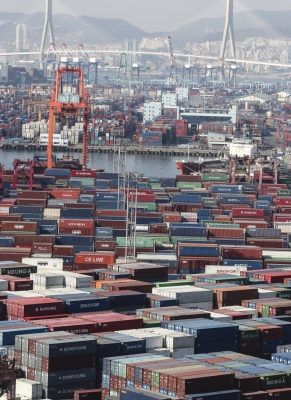
The South Korean economy is on the path to recovery, driven by strong semiconductor exports and improving domestic demand. The Korea Development Institute (KDI) highlighted the positive trend in its monthly economic assessment, citing significant growth in exports, particularly in semiconductors, and a rise in domestic consumption. Despite these encouraging signs, the KDI also pointed out ongoing risks due to uncertainties related to the conflict in the Middle East, which have led to a notable increase in consumer prices.
Elevated oil prices have contributed to upward price pressures, with consumer prices rising by 2.6 percent year-on-year in April, the fastest pace in 21 months. This surge has been primarily fueled by soaring fuel costs linked to the Middle East conflict. However, despite these challenges, economic activities have shown resilience, especially in the services sector, according to the KDI.
In March, industrial production saw a 3.6 percent increase, driven by robust semiconductor output, while services production expanded by 5.1 percent. On the other hand, construction production experienced a decline of 5.4 percent. Retail sales also saw a positive trajectory, growing by 5 percent in March, indicating a relatively strong performance in consumer spending, as reported by the think tank.
The KDI emphasized the sustained growth in exports, particularly in ICT products, despite the external trade uncertainties stemming from the Middle East conflict. South Korea’s exports surged by 48 percent year-on-year in April, reaching a total of US$85.89 billion. Notably, chip exports recorded a remarkable 173.5 percent increase compared to the previous year, reaching $31.9 billion, marking the highest figure ever recorded for the month of April.
