


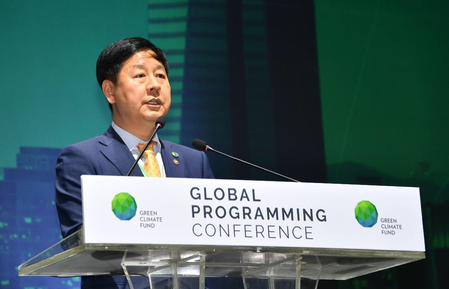
South Korean Finance Minister Koo Yun-cheol emphasized the need for enhanced regional collaboration in light of escalating economic uncertainty stemming from the US-Israeli conflict with Iran. Speaking at the 29th ASEAN+3 Finance Ministers and Central bank governors meeting in Samarkand, Uzbekistan, Koo highlighted the significance of joint efforts in the face of mounting challenges. ASEAN+3 comprises ASEAN member states along with South Korea, Japan, and China, aiming to address economic issues collectively.
“The ongoing Middle East conflict has heightened regional economic instability,” Koo stated, underscoring the pivotal role of ASEAN+3 cooperation during crises. He also expressed concerns about the potential impact of the Middle East crisis on South Korea’s economy, citing government measures like the $17.7 billion supplementary budget to bolster economic resilience. Additionally, Koo led a trilateral discussion involving Finance Ministers and Central bank governors from South Korea, China, and Japan, advocating for increased cooperation to mitigate economic risks arising from the Iran war.
At a recent ASEAN+3 Finance and Central Bank deputies meeting, South Korea’s representation, Moon Ji-sung, Deputy Minister for international economic affairs, participated in discussions. Notably, global economic organizations such as the IMF and ADB cautioned about significant downside risks due to geopolitical tensions in the Middle East. They stressed the urgency of targeted fiscal support, monetary policy adjustments, and efforts to reinforce economic stability to navigate uncertainties effectively. Furthermore, participants deliberated on enhancing the Chiang Mai Initiative Multilateralisation, a regional financial safety net established in 2010 with a $240 billion currency-swap arrangement.
