


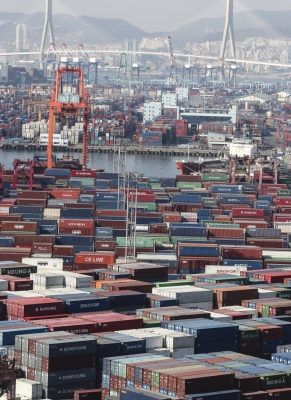
South Korea’s exports saw a significant increase of 44.4% in the first 10 days of February compared to the same period last year. Data revealed that outbound shipments reached $21.39 billion during this timeframe, with a notable rise in demand for semiconductors fueling this growth.
Imports also experienced a surge, rising by 21.1% year-on-year to $20.74 billion in the same period. Consequently, South Korea recorded a trade surplus of $64 million based on the data provided by the Korea Customs Service.
The daily average export volume rose by 34.8% compared to the previous year, with an increase in the number of working days during this period. Notably, semiconductor exports witnessed a remarkable surge of 137.6% to $6.73 billion, driven by the global artificial intelligence (AI) trend.
Exports of petroleum products also showed a notable increase of 40.1% to $1.52 billion. However, there was a decline in automobile exports by 2.6% to $1.35 billion and vessel shipments by 29% to $663 million year-on-year.
By destination, exports to China, South Korea’s primary trading partner, surged by 54.1% to $4.55 billion. Additionally, shipments to the United States rose by 38.5% to $3.6 billion, despite the tariff policies implemented by the U.S. President Donald Trump’s administration.
In January, South Korea’s exports grew by 33.9% year-on-year to $65.85 billion, primarily attributed to the strong demand for semiconductors. Concurrently, the benchmark Korea Composite Stock Price Index (KOSPI) traded higher on Wednesday morning, with gains in auto and bio shares driven by institutional buying.
The KOSPI index increased by 42.82 points, or 0.81%, reaching 5,344.51 as of 11:20 a.m. Despite an initial decline due to concerns over economic slowdown and interest rate cuts, the market showed resilience and positive movement.
