


South Korea’s stock market, KOSPI, experienced a record number of Volatility Interruption (VI) measures in the first half of this year. Data from the Korea Exchange revealed that 29,357 VIs were activated between January and June, the highest ever for a six-month period. These measures are implemented to control extreme price fluctuations in individual stocks by temporarily shifting trading to a two-minute call auction.
The KOSPI also recorded its second-highest first-half volatility on record. With an average intraday volatility of 3.3 percent in the initial six months of 2021, it ranked second after the 3.51 percent seen in the first half of 1998. Intraday volatility is calculated by measuring the index’s fluctuation range during a trading session.
The market’s increased volatility was influenced by a surge in semiconductor stocks due to the AI-driven memory chip supercycle. This led to intense buying and profit-taking activities following substantial market gains. Additionally, geopolitical tensions from the U.S.-Iran conflict that started in late February further amplified market volatility.
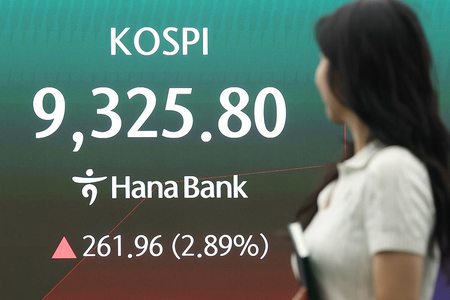
KOSPI achieved significant milestones during the period, surpassing the 5,000-point mark in January, exceeding 6,000 in February, and breaking through the 7,000 and 8,000-point levels in May. Although it peaked above 9,000 on June 18, the index retreated to close at 8,088.34 on Friday.
