


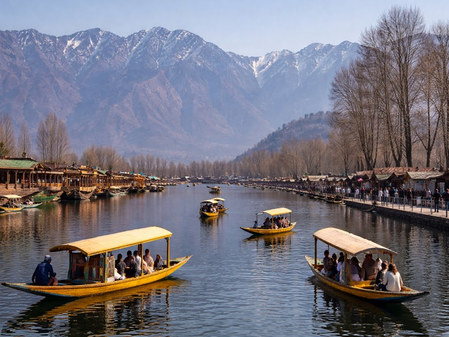
Srinagar experienced its highest-ever maximum temperature for February, reaching 21 degrees Celsius on Saturday, as reported by the Meteorological Department. This temperature surpassed the previous record of 20.6 degrees Celsius set on February 24, 2016. The significant rise, about 10 degrees above normal, is a departure from the usual seasonal averages.
Other areas in the Kashmir Valley also saw relatively high temperatures, with Gulmarg hitting 11.5 degrees Celsius and Pahalgam reaching 17.2 degrees Celsius. Moving to the Jammu region, Jammu city recorded a maximum temperature of 25.2 degrees Celsius, which was 2.9 degrees above the normal range. Katra, Batote, Banihal, and Bhaderwah also experienced higher temperatures than usual.
The winter season in Jammu and Kashmir has seen below-average rainfall and snowfall, causing concerns among farmers and agriculturists due to the warmer February temperatures. Insufficient winter precipitation can lead to water shortages for drinking and irrigation during the summer months. The limited snowfall during the crucial 40-day ‘Chillai Kalan’ period has further heightened worries about water availability.
The traditional heavy snowfall during Chillai Kalan helps replenish water reserves for the summer, but this year’s limited snowfall towards the period’s end has raised alarms. The unexpected rise in February temperatures has reduced hopes for significant snowfall in the near future, intensifying concerns about water resources. March is now crucial for potential snowfall to replenish mountain water reserves before the summer season arrives.
