


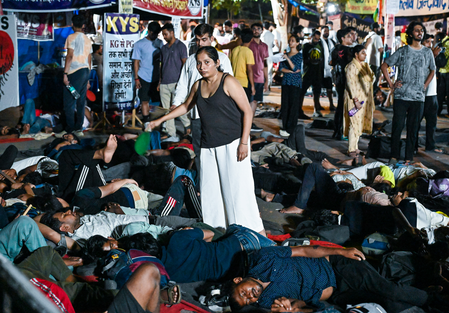
The recent student gathering at Jantar Mantar in New Delhi went beyond protesting an exam issue. It symbolized a broader political and social awakening among the youth. While historically an observatory, Jantar Mantar now serves as a metaphor for democracy’s reliance on both institutions and public voice.
The movement, sparked by exam irregularities, highlighted the anxieties of India’s middle and lower middle classes. These families, valuing education for social mobility, felt a deep sense of insecurity. The protest thus evolved into a call for trust in institutions and the democratic process.
Jantar Mantar became a crucial platform for citizens to voice concerns when traditional channels seemed inadequate. The gathering of young Indians from diverse backgrounds underscored a growing need for public engagement beyond parliamentary boundaries. It signified a shift towards a more inclusive and participatory democracy.
The student movement, driven by aspirations rather than ideology, emphasized practical issues like merit, credible institutions, and employment opportunities. It transcended traditional divides, uniting students through shared concerns about the future. Their peaceful mobilization marked a generational change in activism and civic engagement.
The protest’s significance lies in its reminder that democracy thrives on dialogue and participation. It highlighted the importance of listening to public grievances and engaging with diverse viewpoints. By amplifying the voices of the youth, Jantar Mantar underscored the evolving nature of India’s democratic ethos.
