


A recent suicide bombing at Khadija Tul Kubra mosque in Islamabad resulted in the death of 31 worshippers and left over 160 others injured. This attack is part of a long-standing pattern of violence against the Shia community in Pakistan, with various targets like mosques, processions, buses, hospitals, and shrines being attacked over the past two decades. The bombing has raised concerns about the country’s security measures and the ability to protect vulnerable religious sites.
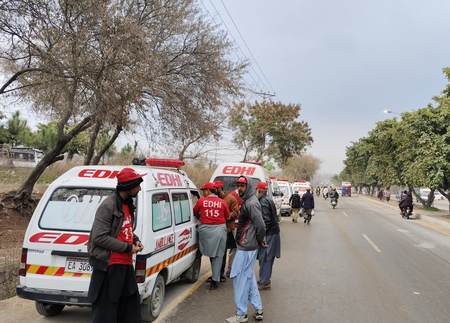
The Khadija Tul Kubra mosque, a popular Shia place of worship, witnessed the tragic incident during Friday prayers, emphasizing the lack of robust security measures. Despite the high surveillance density in the federal capital, the attack exposed serious flaws in threat assessment, intelligence coordination, and on-ground protection of religious sites. The emergency response to the bombing highlighted more improvisation than preparedness, indicating insufficient contingency planning for such attacks.
The bombing in Islamabad, a city symbolizing the Pakistani state with its concentration of ministries, embassies, and military headquarters, signifies a systemic failure of deterrence. Prominent Shia leaders have criticized the security lapses, questioning the performance of law enforcement agencies and expressing doubts about the authorities’ ability to ensure safety. Pakistan, with a significant Shia population of about 40 million, has witnessed ongoing sectarian violence, resulting in thousands of deaths within the community over the past two decades.
The attack on the Shia mosque in Islamabad is not an isolated incident but a product of years of tolerated hate speech, inconsistent enforcement, and a security approach that has not effectively addressed sectarian extremism as a primary national security concern. The continuous targeting of Shia mosques reflects a deeper issue of reluctance to confront sectarian violence as a significant threat. The incident underscores the need for a comprehensive strategy to combat such violence and protect religious minorities in the country.
