


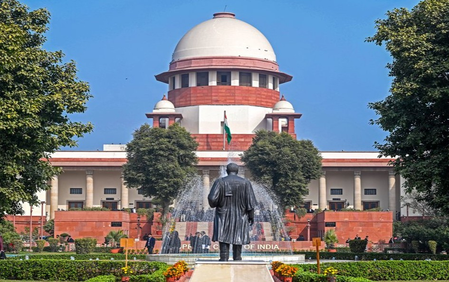
As the nine-judge Constitution Bench continued hearing the Sabarimala review reference, the Supreme Court mentioned that the Constitution might assist a devotee denied access to a deity based on birth. Justice Ahsanuddin Amanullah questioned if permanent exclusion due to birth identity would pass constitutional scrutiny. The Bench, led by Chief Justice of India Surya Kant, is addressing petitions on discrimination at places of worship and religious freedom under Articles 25 and 26.
During the proceedings, senior advocate V. Giri, representing the Sabarimala ‘thantri,’ stated that the right to worship under Article 25 should align with the deity’s essential characteristics. Giri argued that worship should not contradict the nature of the deity, citing the example of Lord Ayyappa at Sabarimala. He emphasized that while birth-based exclusion from priestly functions is impermissible, challenging denominational practices may evolve with time and education.
The Bench also explored whether believers can challenge denominational practices and if internal dissent within a denomination can be brought before a constitutional court. Giri maintained that questioning integral practices would go against religious belief. Justice M.M. Sundresh raised concerns about adjudicating claims of individual believers against collective beliefs, especially when the majority follows a common practice.
The ongoing hearing stems from the 2018 Sabarimala judgment, where a five-judge Bench deemed the exclusion of women aged 10 to 50 from the Sabarimala Ayyappa Temple unconstitutional. Subsequently, a Constitution Bench referred review petitions and religious practice issues to a larger Bench for authoritative resolution.
