


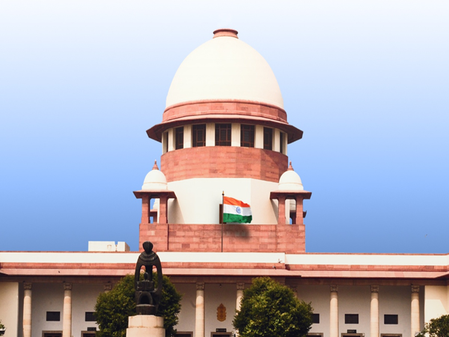
The Supreme Court has decided not to issue fresh guidelines or directives to tackle hate speech in the country, stating that the current legal framework is sufficient to address such offenses. A bench led by Justices Vikram Nath and Sandeep Mehta dismissed a series of petitions that sought judicial intervention against communal hate speeches, including incidents like alleged “Corona Jihad” campaigns and provocative speeches at religious gatherings. The court emphasized that the power to create criminal offenses and define punishments lies with the legislative bodies and cannot be enforced by the Constitutional courts.
The bench highlighted that while the courts can interpret laws and ensure the protection of fundamental rights, they do not have the authority to create new laws. It was noted that hate speech is adequately covered under existing criminal laws, including the Indian Penal Code, which address acts inciting enmity, outraging religious sentiments, and disturbing public peace. The Supreme Court stressed the importance of effective enforcement of existing laws rather than the need for new legislation.
Refuting claims that current laws are insufficient in addressing hate speech, the bench mentioned that remedies are available under the Code of Criminal Procedure (CrPC) and the Bharatiya Nagarik Suraksha Sanhita (BNSS), 2023. The court reiterated that the mandatory registration of an FIR in cases of cognizable offenses is crucial and outlined the steps individuals can take if the police fail to register an FIR. While recognizing the seriousness of hate speech and its impact on societal harmony and constitutional values, the court refrained from issuing new directives.
The Supreme Court acknowledged that hate speech and spreading rumors directly affect unity, dignity, and the constitutional fabric of the nation. It highlighted that the Union and state governments have the freedom to consider whether additional legislative measures are necessary to address evolving societal challenges, including recommendations from the Law Commission’s 267th Report of 2017. The judgment was delivered in response to petitions filed in 2020, alleging the dissemination of communal narratives through various media platforms and public gatherings.
