


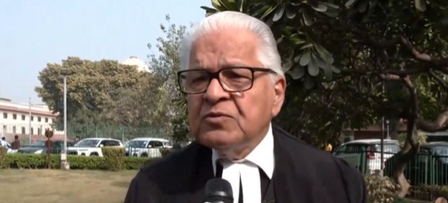
Following the Supreme Court’s decision to deny bail to student activists Sharjeel Imam and Umar Khalid in a case linked to the 2020 Delhi riots, former Union Minister for Law and Justice Ashwani Kumar expressed that the court’s distinction among the accused must have been based on strong reasons. Kumar highlighted the constitutional concerns raised by prolonged incarceration without conviction, emphasizing that bail should generally be the rule over jail, as per criminal jurisprudence principles.
Ashwani Kumar further noted that the court’s decision to grant bail to some accused while denying it to others signifies different grounds found in each case. He stressed the need for a detailed study of the judgment to provide a more comprehensive commentary on the matter. The Supreme Court’s denial of bail to Umar Khalid and Sharjeel Imam was based on the prosecution’s presentation of sufficient material indicating their alleged involvement in a criminal conspiracy related to the 2020 Delhi riots.
The apex court’s decision also included granting bail to five other accused in the case, namely Gulfisha Fatima, Meeran Haider, Shifa Ur Rehman, Mohd Saleem Khan, and Shadab Ahmed. The individuals had challenged a previous order denying them bail under the Unlawful Activities (Prevention) Act. The case pertains to the alleged larger conspiracy behind the violence during the 2020 Delhi incidents. The Supreme Court emphasized that bail decisions should be made based on the specific role attributed to each accused, highlighting the distinct position of Umar Khalid and Sharjeel Imam compared to the other accused.
