


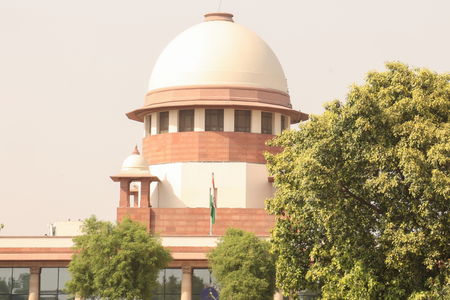
The Supreme Court has rejected an appeal from a woman who sought maintenance for her minor daughter after a DNA test proved that the respondent was not the biological father. The court upheld the scientific evidence over the legal presumption of legitimacy. Justices Sanjay Karol and N.K. Singh dismissed the appeal challenging a Delhi High Court decision that denied maintenance for the daughter but sent the woman’s claim for reconsideration.
The case stemmed from a situation where the woman alleged that the respondent, with whom she had a relationship after working as his domestic help, misled her with promises of marriage. They eventually married in March 2016, and a child was born the next month. Amid marital issues, the woman sought interim maintenance under the Protection of Women from Domestic Violence Act, 2005. The respondent, however, denied paternity and requested a DNA test, which later revealed he was not the child’s biological father.
Despite the legal presumption of legitimacy under Section 112 of the Indian Evidence Act, the Supreme Court emphasized the importance of conclusive scientific evidence when available. The court highlighted that while the presumption safeguards children from illegitimacy stigma, it must yield to irrefutable scientific proof. The DNA test, conducted with mutual consent and unchallenged, led to the rejection of the maintenance plea for the child by the trial court, a decision upheld by higher courts.
The apex court acknowledged the Delhi High Court’s decision to deny maintenance to the child based on the DNA results, deeming the appeal meritless. However, it expressed concerns about the child’s welfare amidst the parentage dispute. In a bid to ensure the child’s well-being, the court directed the Delhi government’s Department of Women and Child Development to evaluate the child’s living conditions, including education, nutrition, health, and basic material needs.
