


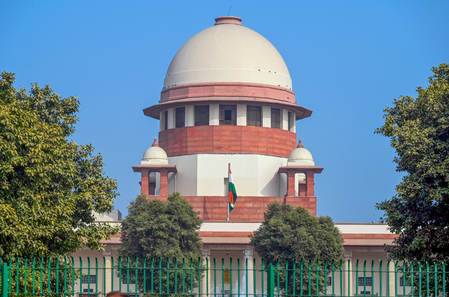
The Supreme Court dismissed a PIL that sought action over alleged derogatory remarks against Prophet Muhammad in a viral social media video. Justices P.S. Narasimha and Alok Aradhe declined the plea, stating that such matters must first exhaust legal remedies before approaching the apex court directly. The bench highlighted the availability of existing legal frameworks to address such grievances, emphasizing the need to follow prescribed procedures.
During the hearing, the bench noted that filing such petitions seemed aimed at sensationalizing the issue and questioned the petitioner’s counsel about awareness of Information Technology Rules. The apex court observed that Article 32 petitions serve other purposes and ultimately dismissed the PIL. It advised the petitioner to utilize legal remedies, including involving police authorities, before seeking court intervention.
The petition, filed by advocate-on-record Ansar Ahmad Chaudhari, had requested authorities to identify and remove social media content containing offensive remarks against Prophet Muhammad. It also urged the Centre to establish guidelines regulating derogatory content towards religious figures. The plea aimed to prevent the misuse of online platforms for inciting communal disharmony and hurting religious sentiments.
The grievance stemmed from a viral podcast clip where respondent Nazia Elahi Khan allegedly made derogatory remarks about Prophet Muhammad, deeply offending Muslims. The petition argued that while freedom of speech is fundamental, it should not extend to deliberately offensive comments that disrupt public order. The plea named respondents including the Union Ministry of Home Affairs, Ministry of Electronics and Information Technology, YouTube, Facebook, and Nazia Elahi Khan.
