


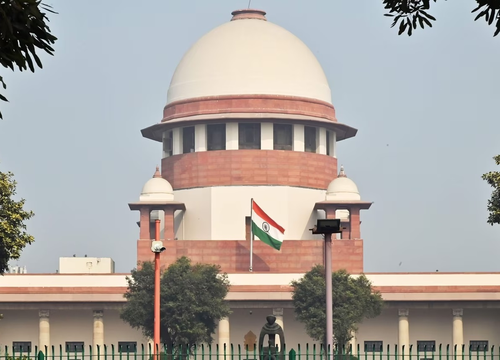
The Supreme Court rejected a review petition challenging its ruling that individuals who convert to Christianity and continue to practice the faith cannot claim Scheduled Caste status or protections under the SC/ST Act. The bench, led by Justices Prashant Kumar Mishra and Manmohan, found no evident errors in its previous decision, dismissing the review petition on July 15.
Furthermore, the apex court decided to overlook the defects in the review petition in the interest of justice but denied the petitioner’s request for an oral hearing in open court. The bench clarified that all pending applications would be resolved accordingly.
In its March 24 judgment, the Supreme Court upheld a High Court order from Andhra Pradesh, stating that individuals who convert to Christianity cannot be considered Scheduled Caste members. The court emphasized that the Constitution’s Scheduled Castes Order of 1950 strictly prohibits individuals professing religions other than Hinduism, Sikhism, or Buddhism from claiming Scheduled Caste status.
The court highlighted that switching to a religion not specified in the Presidential Order results in an immediate loss of Scheduled Caste status. It emphasized that individuals cannot profess a different religion while retaining Scheduled Caste status. The court noted that the individual in question had been practicing Christianity for over a decade, making his religious identity clear and leaving no room for doubt.
Earlier, the Andhra Pradesh High Court had ruled that individuals who convert to Christianity cannot avail themselves of Scheduled Caste protections under the SC/ST Act, citing the exclusion of non-specified religions in the Constitution’s Scheduled Castes Order of 1950.
