


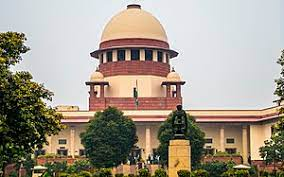
The Supreme Court raised concerns about the legal basis for exempting Waqf institutions from paying court fees in proceedings before Waqf Tribunals. Justices P.S. Narasimha and Aravind Kumar questioned the lack of a clear statutory provision supporting such exemptions. This inquiry arose during a special leave petition hearing against Gujarat High Court orders rejecting suits by Waqf institutions due to insufficient court fees.
The apex court expressed doubts over the contention that Waqf bodies are not obligated to pay court fees. The petitioner, represented by advocate Ejaz Maqbool, requested time to present additional material challenging the Gujarat High Court’s ruling. The court granted an extension and scheduled further hearings for August 7, 2026.
The controversy revolves around suits filed by Waqf institutions before the Gujarat State Waqf Tribunal seeking possession of Waqf properties. The Waqf Tribunal found that plaintiffs had undervalued proceedings and failed to pay required court fees. Consequently, the tribunal dismissed the plaints under the Code of Civil Procedure.
The Gujarat High Court dismissed revision petitions by Waqf institutions, emphasizing the applicability of the Gujarat Court Fees Act to Waqf Act proceedings. It ruled that Waqf institutions were not statutorily exempt from court fees and that failure to pay justified rejection of the plaint. The court maintained that describing proceedings as mere “applications” did not exempt them from court-fee laws when they sought adjudication of rights and property recovery.
