


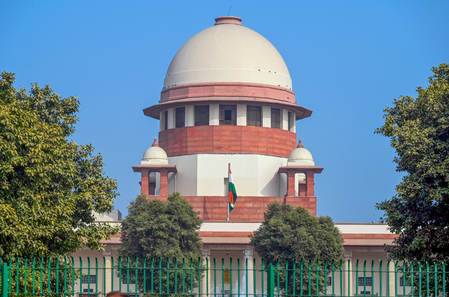
In a significant ruling on bail jurisprudence, the Supreme Court emphasized that courts cannot mandate the sale of an accused person’s property to settle alleged claims. The court stated that bail proceedings should not be used for the recovery or resolution of civil disputes.
The apex court’s decision came in response to an appeal filed by the accused against a Madras High Court order. The High Court had directed the sale of the accused’s immovable properties and the distribution of proceeds to complainants as a condition for granting bail.
Highlighting the limited jurisdiction of courts during bail proceedings, the Supreme Court stressed that the primary focus should be on deciding whether an accused should be released pending trial. The court underlined that conditions for bail must be related to ensuring a fair investigation or trial and should not stray into civil matters.
The case originated from an FIR filed in June 2025 at the CCB Police Station in Tamil Nadu’s Tiruchirappalli, alleging offenses under various sections of the IPC related to cheating and misappropriation of funds. The accused had spent 83 days in custody during the investigation.
The Supreme Court overturned the condition imposed by the Madras High Court, emphasizing that bail conditions should directly serve the purpose of facilitating a proper investigation or trial. It reiterated that bail proceedings should not be transformed into mechanisms for civil relief or recovery.
