


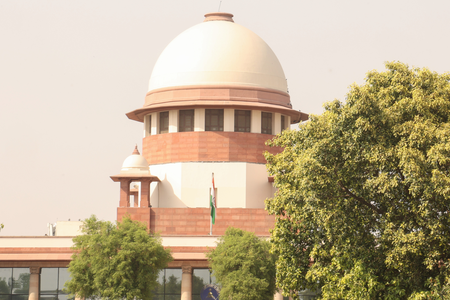
The Supreme Court overturned a bail order granted by the Patna High Court to a man accused in a dowry death case, criticizing it as “wholly unsustainable” due to a “mechanical approach” in serious offenses. The appeal filed by the deceased woman’s mother was accepted, directing the deceased woman’s husband to surrender to jail authorities within a week, or face a non-bailable warrant from the trial court. The dowry death case originated from an FIR filed on September 1, 2024, at Gopalpur Police Station in Bihar under specific sections of the Bharatiya Nyaya Sanhita, 2023.
The deceased woman, married for about one-and-a-half years, was discovered dead at her marital home under suspicious circumstances with various internal and external injuries. The victim’s mother lodged the FIR, alleging that despite substantial dowry given at the time of marriage, the accused and his family demanded more items, leading to harassment. The accused also allegedly engaged in an extramarital relationship within six months of the marriage, escalating disputes and harassment. Post-mortem findings revealed severe injuries, including a skull fracture, ruptured sternum and heart, pelvic fracture, and multiple abrasions, with the cause of death attributed to head injury-related hemorrhage and shock.
The Supreme Court criticized the Patna High Court for not properly assessing critical evidence while granting bail, emphasizing the seriousness of the allegations in a dowry death case. The apex court highlighted the High Court’s oversight of crucial aspects, including the post-mortem report’s severe injuries and statutory presumptions. Expressing concern over the trend of granting bail in such cases, the Supreme Court stressed the need for heightened judicial scrutiny in dowry death cases to maintain public trust in the judiciary’s commitment to combating this issue.
The Supreme Court rejected the defense’s argument suggesting suicide as a possibility, clarifying that even suicides linked to dowry harassment are punishable by law. While setting aside the Patna High Court’s bail order, the Supreme Court emphasized that it was not passing judgment on the case’s merits, leaving the trial court to decide based on evidence. The trial court was instructed to expedite the trial, ideally completing it within six months, and a copy of the judgment was to be sent to the Registrar General of the Patna High Court for further action.
