


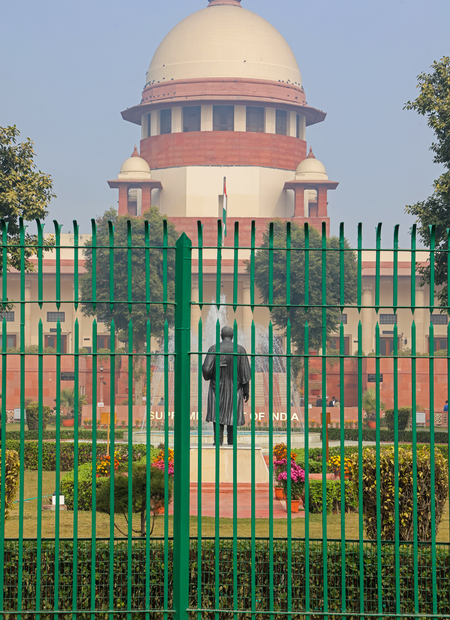
The Supreme Court announced plans to instruct the Central Board of Secondary Education (CBSE) to incorporate an “opt-out” choice in consent forms for generating APAAR IDs, following the Orissa High Court’s ruling. The directive aims to ensure that participation in the APAAR scheme remains voluntary, with clear provisions for parents to decline consent. The CBSE will be directed to implement this decision nationwide, as confirmed by the Chief Justice of India-led Bench.
The apex court emphasized that CBSE circulars must comply with existing laws, including the Digital Personal Data Protection (DPDP) Act, 2023. The implementation of the APAAR scheme should align with the legal framework in place, ensuring adherence to data protection regulations. A writ petition filed by parents challenging the constitutional validity of the APAAR ID scheme and its link to Aadhaar was being heard by the court.
Senior advocate Indira Jaising, representing the petitioners, argued that the APAAR scheme, though labeled voluntary, indirectly necessitates Aadhaar for students to obtain APAAR IDs. The petition raised concerns over the mandatory nature of obtaining Aadhaar for educational purposes, highlighting potential violations of the right to education as a fundamental constitutional right. Additionally, the petition stressed the importance of complying with the DPDP Act in securing parental consent for APAAR enrollment.
The petition also questioned the centralized nature of the APAAR framework, alleging that it facilitates long-term tracking and profiling of students through an Aadhaar-linked academic identifier. It contended that the mandatory requirement of APAAR for Board examination registration infringes on privacy rights and decisional autonomy guaranteed under the Constitution. The plea further argued that the scheme lacks statutory backing and fails to meet legal standards set by the Supreme Court.
