


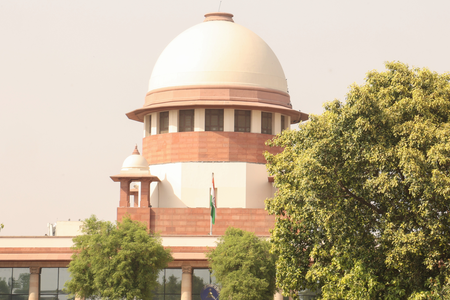
The Supreme Court is set to address a series of petitions on Thursday challenging the legality of unilateral divorce methods in the Muslim community, such as Talaq-e-Hasan and Talaq-e-Ahsan. These practices allow a Muslim man to end a marriage without his wife’s consent. The petitions question whether these forms of divorce violate fundamental rights guaranteed under the Constitution, particularly the rights of Muslim women to equality and dignity.
The matter is scheduled for hearing on March 19 before a Bench led by Chief Justice of India Surya Kant and Justices Joymalya Bagchi and Vipul M. Pancholi. During the previous hearing, the Supreme Court issued interim directions in specific cases but refrained from making a final determination on the validity of the practices themselves. The Court emphasized the importance of a balanced approach when dealing with issues at the intersection of personal law and constitutional rights.
In a notable case, the Court stayed the implementation of an alleged Talaq-e-Hasan pronounced by a husband against his wife. The Court directed that the petitioner and respondent should be considered a validly married couple unless evidence of a lawful Talaq is presented. The Supreme Court highlighted the significance of minimal interference in religious matters unless they directly infringe upon fundamental or human rights.
In a case filed by journalist Benazeer Heena, the Court referred the parties to mediation to explore an amicable resolution, including a mutually acceptable dissolution of marriage. Former Supreme Court judge Justice Kurian Joseph was appointed as the sole mediator, with a request to conclude the process within four weeks. The Court clarified that its interim orders were specific to individual cases and did not constitute a final judgment on the practices themselves.
The petitions also raise broader concerns, including the legality of divorce communicated through electronic means like email and messaging platforms. They seek guidelines to protect the rights of affected women during divorce proceedings.
