


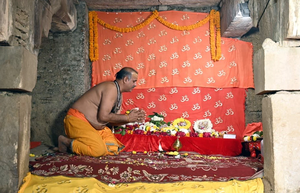
The Supreme Court is set to consider a plea from the Hindu side requesting permission to offer prayers at the alleged Shivling within the sealed area of the Gyanvapi premises during the Sawan month. Fresh petitions by the Hindu side seek approval for worship and Jalabhishek of the Shivling located inside the sealed wuzukhana area of the Gyanvapi mosque complex. The area has been sealed since 2022 following a Supreme Court interim order.
The Hindu side has assured the court of full compliance with any judicially imposed conditions, including security arrangements, as they seek authorization for the religious rituals. The disputed structure, believed by Hindus to be a Shivling, was uncovered during a court-monitored survey in 2022 and has since been sealed as per the Supreme Court’s directives.
Both Hindu and Muslim parties recently rejected the Supreme Court’s mediation proposal under the “Samadhan Samaroh” initiative, opting for resolution through the regular judicial process based on legal merits. The Hindu side contends that the Gyanvapi mosque was constructed post the demolition of a temple in the Mughal era, while the Muslim side asserts the mosque’s status as a legally recognized Waqf property, disputing the Hindu petitioners’ claims.
Significant legal developments have unfolded in the past year regarding the dispute. In January 2024, the Varanasi District Court allowed Hindu devotees to pray in the Vyas Tehkhana, the southern cellar of the Gyanvapi mosque complex. Subsequently, the Allahabad High Court rejected the Gyanvapi mosque management committee’s appeal against the district court’s ruling. The High Court instructed the Varanasi District Magistrate to facilitate the Shri Kashi Vishwanath Temple Trust in conducting worship rituals at the Vyas Tehkhana as per the court’s directives.
