


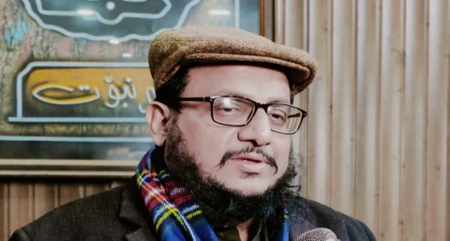
The recent speeches by Talha Saeed and Saifullah Qasur in Lahore, Pakistan, are not isolated incidents but part of a broader pattern. Talha Saeed, son of UN-designated terrorist Hafiz Muhammad Saeed, called for jihad against India and Israel, framing it as a wider civilisational confrontation. Lashkar-e-Taiba figure Saifullah Qasuri further escalated the rhetoric, positioning Pakistan as a leader in a global Islamic battle.
Italian author Sergio Restelli highlighted that Talha Saeed, as the son of Hafiz Saeed, signifies a generational shift within Lashkar-e-Taiba. The terror group, known for attacks against India, is now expanding its focus beyond India. Saifullah Qasuri’s remarks intensified the narrative, claiming Pakistan’s active role in battling Israel, India, and Afghanistan.
The speeches underscore a contradiction for Pakistan, which aims for international legitimacy while allowing jihadist narratives to be propagated publicly. This dual stance undermines Pakistan’s credibility, complicates its diplomacy, and fuels domestic instability. The ideological infrastructure of jihadism in Pakistan remains adaptive and globally resonant, as observed by Restelli.
