


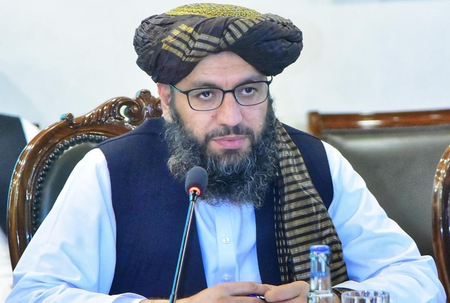
Taliban leader Mufti Noor Ahmad Noor’s reported arrival in New Delhi to take over as Charge d’Affaires at the Afghan Embassy has stirred mixed reactions, with some viewing it as a diplomatic move. India’s decision to host a Taliban representative in Delhi is seen as a pragmatic engagement rather than formal recognition of the Kabul government. This move challenges China and Pakistan’s efforts to integrate Afghanistan into the China-Pakistan Economic Corridor under the Belt and Road Initiative.
In India, having Kabul’s representative is crucial for the thousands of Afghan refugees residing there, as they require consular services for passport validation, visa processing, and other essential needs. Faisal Payenda, Chairman of Afghan Refugee Community in India, estimates that Delhi alone is home to around 15,000 Afghan refugees. While several countries globally host Taliban-appointed diplomats, they usually designate them as “Charge d’Affaires” or “representatives” without granting full ambassadorial recognition.
China aims to leverage economic incentives to maintain influence over Kabul, but India’s diplomatic approach remains cautious, providing consular and community services without formal recognition. Despite China’s similar diplomatic arrangement, it has refrained from recognizing the Taliban government officially. Russia stands as the only country to have acknowledged the Taliban regime so far. China has emphasized the need for Taliban assurances regarding Uyghur militants and broader anti-terrorism cooperation.
The presence of a Taliban representative in New Delhi signifies the group’s pursuit of legitimacy beyond Islamabad and Beijing, especially amidst strained relations with Pakistan, leading to border closures and trade disruptions. India’s engagement strikes a balance, offering consular services without taking a clear political stance on recognition. As the Taliban seeks broader legitimacy, it is likely to navigate its relationships with regional powers like India, China, and Russia before aligning with any specific bloc.
India’s ongoing humanitarian and reconstruction efforts in Afghanistan aim to foster goodwill and counter geopolitical rivalries, emphasizing the importance of maintaining ties despite challenges and uncertainties. The current scenario underscores the delicate diplomatic dance between various stakeholders in the region, each vying for influence and strategic positioning.
