


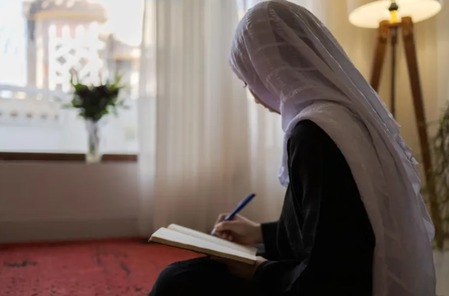
It was noted that shortly after Taliban leader Sheikh Hibatullah Akhundzada expressed interest in expanding Afghanistan’s global relations, a documentary shedding light on women’s challenges in the country gained attention. Despite various reports on women’s issues, the treatment of women by the Taliban remains a significant obstacle to gaining international recognition. The lack of inclusive governance, concerns about militant group affiliations, and broader human rights violations are also cited as reasons for the absence of recognition by most governments and international bodies.
A recent UN report emphasized the struggles faced by women refugees returning to Afghanistan, revealing that only a small percentage of them are able to earn income. Many women, despite acquiring skills abroad, encounter limited job opportunities upon returning to Afghanistan, leading to a significant gap in utilizing their vocational, technical, and digital skills. The challenges faced by Afghan women, including restrictions on education and employment, economic downturn, and exclusion from public life, were highlighted in a report by an international media outlet.
Since the Taliban regained power in 2021, there has been a systematic regression in women’s rights in Afghanistan, with restrictions on girls’ education, women’s employment, freedom of movement, and participation in public life without a male guardian. Despite Russia’s formal recognition of the Taliban government in July 2025, no other country has followed suit. The lack of global recognition hampers the Taliban’s legitimacy in diplomatic affairs, asset management, and trade.
The recognition by Russia was primarily driven by strategic interests, aiming to enhance trade relations, particularly in energy, infrastructure, agriculture, and regional connectivity. Analysts suggest that Moscow sought to establish itself as a leader among authoritarian states and expand its influence in Central and South Asia. The absence of global recognition poses challenges for the Taliban in engaging in diplomacy, accessing assets, and conducting trade activities.
The Taliban’s severe restrictions on women and girls, including limitations on education, employment, movement, public visibility, and access to services without a male relative, have drawn international concern. The visible impact of these restrictions on women’s rights, such as barring girls from high school and imposing strict dress codes, highlights the regime’s ideology. Efforts to improve economic opportunities for women returnees in Afghanistan and enhance social cohesion with host communities have been recommended, but effective implementation requires direct engagement with the Taliban regime by the global community.
