


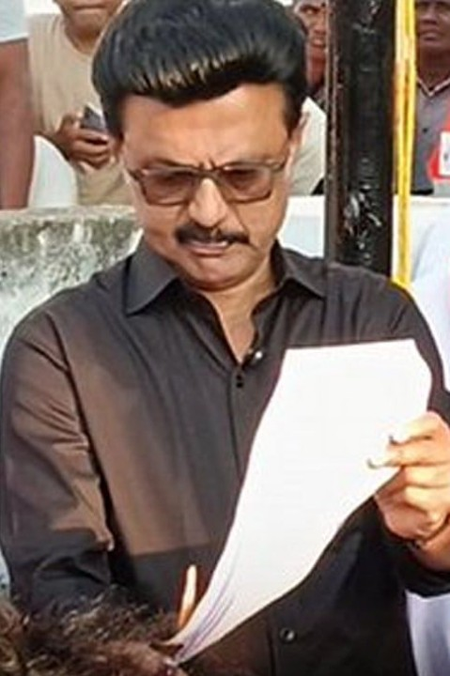
Tamil Nadu Chief Minister M.K. Stalin demonstrated his opposition to the Centre’s proposed delimitation exercise by burning a copy of the bill and flying a black flag in Namakkal. He urged people in Tamil Nadu to display black flags at their homes to signify their dissent against what he termed a “black law” threatening the state’s political representation. The Dravida Munnetra Kazhagam (DMK) supported this protest to strengthen their stance and encourage public involvement.
A black flag was also raised outside Stalin’s residence in Chennai as a symbolic gesture. The protest coincides with the special parliamentary session from April 16 to 18, where the Union government is set to introduce significant legislation, including the Delimitation Bill and amendments related to Union Territories. These measures aim to redefine parliamentary constituencies and enable 33% reservation for women in the Lok Sabha.
The current Lok Sabha composition is based on the 1971 Census, with 543 elected members out of a maximum of 550. Due to India’s population growth, the Centre plans to conduct a new delimitation exercise, potentially increasing the Lok Sabha’s strength to around 850 members, with seats allocated for Union Territories. These reforms are linked to implementing women’s reservation before the 2029 general elections.
Stalin continued his election campaign in Namakkal district ahead of the April 23 Assembly polls, engaging with farmers, traders, and the public while endorsing the DMK candidate Rani. He emphasized Tamil Nadu’s strong opposition to any alteration in representation that could disadvantage the state, calling it a threat to federal balance. The black flag protests in Tamil Nadu are viewed as a united display of dissent as Parliament deliberates on the contentious bills.
