


Tamil Nadu is working on establishing a structured system to evaluate the environmental and climate effects of urban tree-planting initiatives. A newly proposed roadmap suggests a scientific method to measure how increasing greenery in cities aids in climate mitigation and enhances urban ecological resilience.
The framework aims to offer a dependable way to monitor the various environmental advantages brought about by urban forestry programs. These benefits go beyond just enhancing aesthetics and preserving biodiversity; they also include carbon sequestration, cooling urban temperatures, enhancing groundwater replenishment, improving flood control, and ensuring overall ecological stability in rapidly urbanizing areas.
The roadmap, developed as part of the Indo-German Support Project for Climate Action in India, aims to integrate climate-focused assessments into urban forestry projects in Tamil Nadu. Experts working on the project stress the significance of establishing measurable indicators to incorporate the environmental benefits of tree-planting initiatives into climate planning and sustainability strategies.
Urban forestry efforts in Tamil Nadu have traditionally focused on increasing green cover, restoring ecological equilibrium, and enhancing biodiversity in cities. However, the broader climate benefits derived from these initiatives have not been systematically quantified until now. The lack of reliable data has hindered the incorporation of urban forestry outcomes into policy planning, climate reporting, and investment decisions.
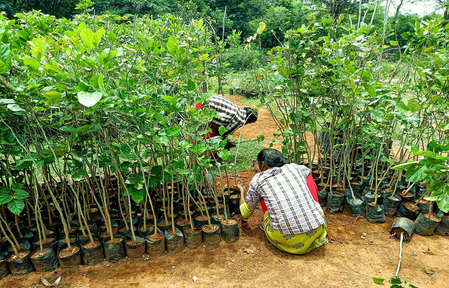
Tamil Nadu has undertaken extensive tree-planting endeavors in recent years through the Green Tamil Nadu Mission. Preliminary assessments suggest that these plantations have the potential to sequester between two and three lakh tonnes of carbon dioxide annually. Despite ongoing data compilation on urban plantations, initial estimates indicate that approximately 25 lakh seedlings have already been planted in urban areas across the state.
While facing challenges like limited land availability in cities and the need for sustained plantation maintenance, urban forestry programs aim to quantify both climate mitigation and adaptation benefits of urban forests. The proposed methodology plans to estimate carbon dioxide removal by measuring biomass accumulation in trees through field assessments like trunk diameter or standard carbon sequestration factors.
In addition to carbon capture, the framework identifies four key adaptation indicators: reduction in urban heat island effects, enhanced groundwater replenishment, improved stormwater and flood management, and promotion of biodiversity in urban ecosystems. Trees play a vital role in reducing temperatures through shading and evapotranspiration, while vegetation aids in enhancing soil infiltration and reducing surface runoff during heavy rainfall.
Several institutional and technical challenges have been recognized in implementing the monitoring system, including the lack of baseline environmental data, inadequate technical training for field personnel, and underutilization of modern monitoring tools like remote sensing and environmental sensors. The roadmap suggests a phased implementation of the framework through pilot studies, policy guidance, and capacity-building initiatives.
