


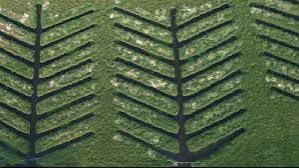
The Tamil Nadu Forest Department has undertaken a significant project to plant 20,000 mangrove seedlings over 20 hectares along the Buckingham Canal during 2025–26. This initiative aims to restore coastal ecosystems and enhance Chennai’s resilience to climate change. Additional Chief Secretary Supriya Sahu shared project details on social media, highlighting the creation of a natural coastal bioshield and the improvement of ecological balance in the region.
To facilitate mangrove growth, officials have introduced an innovative “fishbone” canal system to ensure proper tidal flow of saline water, crucial for the survival of mangroves. This system comprises eight main fishbone canals, eight feeder canals, and 186 distribution channels, allowing effective seawater circulation across the plantation area. The mangrove plantation, supported by ICICI Bank’s corporate social responsibility program, is led by the Chennai Forest Division.
The restoration effort is being carried out in phases to establish a continuous mangrove green belt along vulnerable coastal stretches of the district. In the initial phase, an island near Hiranandani Apartments at Kazhipattur village was selected for plantation after obtaining necessary permissions. During the 2024–25 phase, 12,500 mangrove seedlings of six species were planted across 20 hectares, along with 2,500 coastal species to enhance the ecological habitat.
The subsequent phase involved planting about 5,000 mangrove saplings on Battle of Adyar Island, including species like Rhizophora mucronata and Avicennia marina. The latest phase has added 20,000 mangrove seedlings representing five species, further contributing to the restoration of Chennai’s mangrove cover. Chennai District Forest Officer V.A. Saravanan emphasized that this phased restoration program aims to protect the coastline, nurture biodiversity, and enhance the city’s long-term ecological resilience.
