


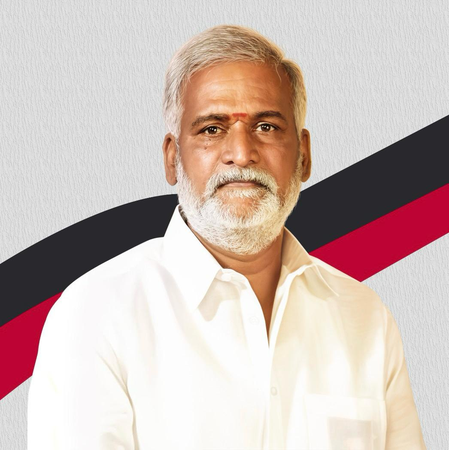
Tamil Nadu’s Hindu Religious and Charitable Endowments Minister P.K. Sekar Babu criticized the BJP for allegedly trying to create communal strife by politicizing the recent dispute involving the Karthigai Deepam lamp at the Thirupparankundram hill temple. He emphasized that this attempt to sow discord had failed, indicating that “Lord Murugan himself did not support such divisive politics.”
Sekar Babu, addressing the media, accused the BJP of using the revered Thirupparankundram Murugan temple as a political tool to stoke religious sentiments and disrupt societal harmony. He stated that the party’s efforts to incite communal hatred in the name of Lord Murugan would not succeed under the Dravida Munnetra Kazhagam (DMK) government led by Chief Minister M.K. Stalin.
The controversy arose when certain groups alleged that the traditional lighting of the Karthigai Deepam at the Thirupparankundram hill was obstructed, leading to accusations of an attack on the Hindu faith. The BJP protested, claiming government interference in religious practices, thereby transforming the issue into a politically charged matter.
The Minister clarified that there was no meddling in religious rituals and that all customary practices were meticulously followed in adherence to temple traditions and court orders. He denounced the attempt to fabricate a false narrative and incite communal sentiments, emphasizing the people of Tamil Nadu’s discernment in seeing through such tactics.
Sekar Babu reaffirmed the DMK government’s commitment to impartially safeguarding all religions and ensuring transparent and peaceful administration of temples. He stressed the government’s dedication to upholding every faith, preventing the exploitation of religion for political motives, and preserving communal harmony.
The Minister highlighted that the failure of the controversy to garner public support demonstrated the unity of the people of Tamil Nadu against divisive politics. He underscored that those attempting to exploit Lord Murugan’s name for political advantage had been rebuffed by the public, emphasizing the state’s adherence to principles of social justice, secularism, and harmony in managing religious institutions.
