


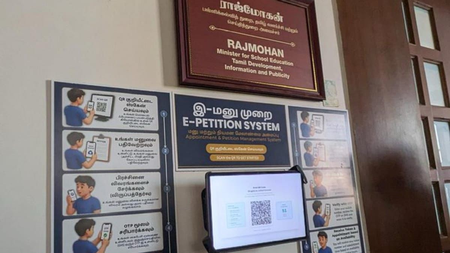
In a move to streamline public services and reduce paperwork, Tamil Nadu School Education Minister Rajmohan has launched an electronic petition (e-petition) system at his office in the State Secretariat. This system allows the public to submit grievances through a QR code-based platform, aiming to expedite the grievance redressal process and enhance transparency while being eco-friendly by replacing traditional paper submissions with a digital interface.
Visitors can now scan a QR code outside the minister’s office to electronically submit their petitions before meeting him, directing them to an online portal for entering personal details and uploading digital copies of their petitions. The system accommodates physical document scanning as well, ensuring all submissions, digital or paper, are processed through a unified platform.
To enhance accessibility, the portal provides options for petitioners to briefly describe their grievances or upload voice recordings, though these features are voluntary and intended to aid effective communication of concerns. This new platform is anticipated to reduce petition registration time significantly, improve record management, and facilitate easier tracking of grievances received by the minister’s office.
Alongside the e-petition system, a token-based visitor management system has been introduced to regulate appointments during public grievance sessions at the Secretariat. Online registrants will receive a token number and appointment slot based on the minister’s availability, effectively reducing overcrowding and long waiting times. Detailed instructions for the registration process are prominently displayed outside the minister’s office to assist visitors in navigating the new system.
Rajmohan, overseeing School Education, Tamil Development, and Information and Publicity, is pioneering the QR code-enabled grievance mechanism in the Tamil Nadu government. This initiative is seen as a potential model for other government departments aiming to modernize citizen services and enhance public access through digital governance.
