


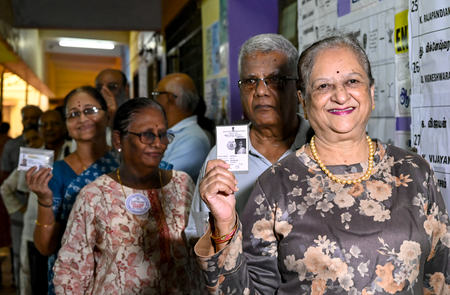
Tamil Nadu concluded polling for all 234 Assembly constituencies with a robust voter turnout exceeding 84%, showcasing strong public engagement in a closely watched election. The electoral landscape shifted from the traditional two-party dominance to a multi-cornered contest involving the DMK-led Secular Progressive Alliance, the AIADMK-led NDA, actor Vijay’s Tamilaga Vettri Kazhagam (TVK), and Seeman’s Naam Tamilar Katchi (NTK).
The voting process commenced energetically with substantial queues in both urban and rural areas despite high temperatures. By 3 p.m., the turnout had reached approximately 70%, indicating significant voter interest that led to one of the highest participation rates in recent elections. The ruling DMK, led by Chief Minister M.K. Stalin, aims for a second consecutive term, relying on welfare programs and governance achievements.
The AIADMK, led by Edappadi K. Palaniswami, is striving for a comeback amidst internal factional challenges, making this election pivotal for its political standing. Actor Vijay’s TVK, contesting all 234 seats, seeks to leverage its increasing popularity, particularly among the youth, into electoral success. Concurrently, Senthamizhan Seeman’s NTK has fielded candidates across constituencies, emphasizing Tamil nationalism, environmental concerns, and an alternative political narrative appealing to young and first-time voters.
The emergence of these new players has transformed the election into a four-cornered battle, potentially reshaping vote distributions and traditional electoral calculations. While the polling process was mostly peaceful, a few isolated incidents of tension and logistical issues were reported, such as crowd management problems at certain booths and minor disruptions. Nevertheless, authorities ensured overall smooth conduct with extensive security measures in place.
With over 5.7 crore eligible voters participating in the electoral process, the 2026 Tamil Nadu Assembly election is poised to be a significant political event. The election results, scheduled for May 4, will determine whether the DMK continues its stronghold or faces a shift amid the ascent of new political entities like TVK and NTK.
