


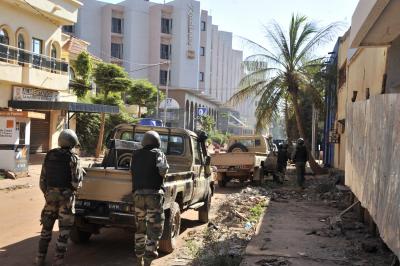
As the terror group Jama’a Nusrat ul-Islam wa al-Muslimin (JNIM) strengthens its hold in Mali, experts warn that the threat is spreading beyond Africa. This growing concern, likened to a “waterbed effect,” where pressure in one area leads to resurfacing in another, has raised alarms globally. Counter-terrorism expert Peter Knoope highlighted the urgent need for international attention to the escalating situation in Mali.
Expressing worry over the lack of focus on Mali’s developments, Knoope stressed the importance of mobilizing global expertise to address the evolving crisis. He pointed out the alliance between JNIM and the Azawad Liberation Front (FLA) in Northern Mali, emphasizing the potential for a larger conflict. The recent coordinated attacks by JNIM and Tuaregs in Mali, resulting in the death of the Malian defense minister, have further escalated tensions in the region.
The emergence of a terrorist-controlled state in West Africa has significant implications, with Mali potentially becoming a hub for spreading terrorism. Knoope drew parallels to past extremist movements like Daesh, highlighting the need for proactive measures to prevent further destabilization. The expert underscored the importance of understanding and addressing the root causes of grievances to combat terrorism effectively.
Soft power strategies, aimed at winning hearts and minds, are crucial in countering terrorism, according to Knoope. He emphasized the necessity of a balanced approach combining both hard and soft power to address the complex challenges in the region. Highlighting the failure of current governance structures in the region, particularly in Mali, Knoope called for a comprehensive strategy to tackle the growing threat posed by JNIM and its allies.
