


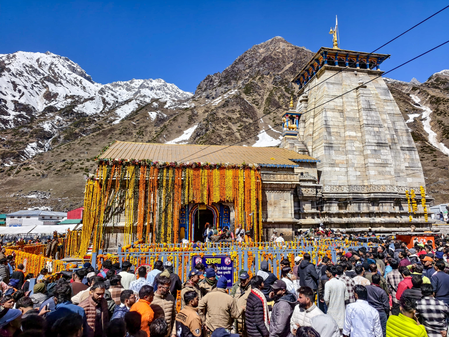
The Char Dham Yatra in India is a revered pilgrimage that annually attracts numerous devotees to the sacred shrines of Yamunotri Temple, Gangotri Temple, Kedarnath Temple, and Badrinath Temple in the Himalayas. While physically demanding, the journey holds deep spiritual importance rooted in ancient legends and beliefs that shape the essence of the pilgrimage.
The temples not only showcase grandeur but also carry rich traditions of stories reflecting devotion, sacrifice, and divine intervention. These narratives, integral to the faith of millions embarking on the pilgrimage, offer seekers peace, clarity, and spiritual rejuvenation. The journey typically commences at Yamunotri, the source of the Yamuna River, dedicated to Goddess Yamuna and steeped in the legend of Sage Asit.
Sage Asit, known for his unwavering devotion even in old age after losing his eyesight, is believed to have had his vision restored by Goddess Yamuna due to his faith. This tale emphasizes the transcendence of physical limitations through true devotion, infusing the sacred waters with exceptional spiritual power. The pilgrimage then progresses to Gangotri, associated with the revered legend of King Bhagirath and the descent of the Ganga to Earth.
King Bhagirath’s intense penance led to Lord Shiva agreeing to receive the river in his locks, ensuring Earth’s safety. The river’s flow is believed to purify the land and offer salvation, embodying perseverance and the transformative strength of faith. Kedarnath, another significant stop, is linked to the Mahabharata and the Pandavas seeking forgiveness from Lord Shiva.
The narrative of Lord Shiva revealing himself as a Jyotirlinga at Kedarnath underscores themes of repentance and divine mercy, emphasizing that sincere effort and faith can lead to redemption. Finally, Badrinath, dedicated to Lord Vishnu, symbolizes the pinnacle of the pilgrimage, with Vishnu meditating in the region and Goddess Lakshmi providing shelter as a “badri” tree.
This story signifies the harmony between nature and divinity, underlining the importance of discipline and penance in spiritual growth. The Char Dham Yatra, often described as a journey of body, mind, and soul, represents different stages of spiritual evolution at each destination. Yamunotri signifies purification, Gangotri divine grace, Kedarnath repentance, and Badrinath enlightenment.
Together, these stages form a transformative path encouraging introspection and personal growth, challenging pilgrims physically and emotionally. Despite the passage of time, the legends of Char Dham continue to resonate, offering timeless guidance in a fast-paced world. The pilgrimage not only attracts religious devotees but also seekers of meaning and connection, providing a chance to disconnect from daily pressures and reconnect with inner spirituality.
The enduring lessons of ancient legends carried back by pilgrims from the Himalayas inspire generations, emphasizing that spiritual journeys are about transformation along the way, not just reaching a destination.
