


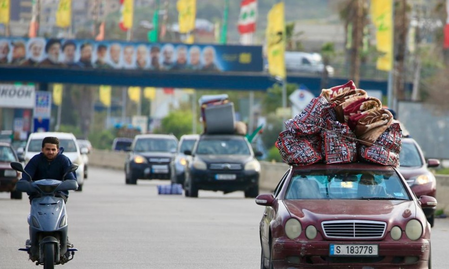
Following the Israel-Lebanon ceasefire, thousands of the 1.2 million displaced individuals in southern Lebanon are heading back home despite the risks of unexploded ordnance, as per UN humanitarians. Displaced families are beginning to return to Beirut’s southern suburbs and parts of Nabatieh and Tyre in southern Lebanon, according to the UN Office for the Coordination of Humanitarian Affairs (OCHA).
OCHA cautioned that safety risks persist due to unexploded ordnance in various residential areas across the South and Nabatieh governorates. Despite the warnings, numerous people were observed traveling south early in the morning, causing congestion on major roads near Qasmiyeh and Zefta in southern Lebanon. Temporary solutions have been implemented at river crossings in the South governorate and along the coastal route of Qasmiyeh to aid in the return process.
By Friday evening, the number of individuals in collective shelters had decreased to 113,000 from the 141,000 recorded on Thursday. Partners are actively supporting the humanitarian response in collaboration with local authorities, as stated by OCHA. The 10-day ceasefire between Israel and Lebanon commenced at midnight between Thursday and Friday local time.
UN Secretary-General Antonio Guterres expressed his approval of the ceasefire, emphasizing the UN’s backing for efforts to cease hostilities and alleviate the suffering of communities on both sides of the Blue Line. The UN peacekeeping mission monitoring the Blue Line reported no projectiles fired into Israel or Israeli airstrikes in their operational area since the ceasefire began.
