


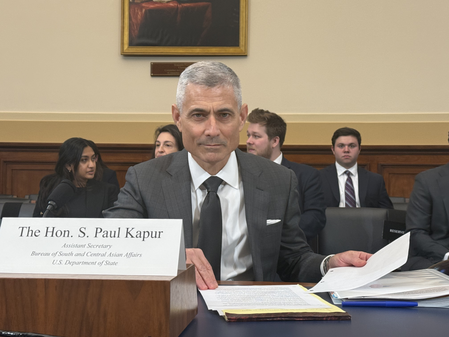
The Trump Administration has shown optimism regarding Nepal’s forthcoming election, attributing recent political turmoil in the country to a broader wave of democratic changes in South Asia. Assistant Secretary of State for South and Central Asian Affairs Paul Kapur expressed readiness to collaborate with Nepal’s future government following a period of unrest. Kapur highlighted similarities in democratic progress across the region, citing youth movements leading to regime changes and fostering democratic engagement.
Lawmakers pointed out that Nepal witnessed significant anti-corruption protests by Gen Z in September, resulting in the prime minister’s resignation and paving the way for upcoming elections. The US anticipates a smooth electoral process in Nepal and is prepared to engage with the election winners. Subcommittee Chair Bill Huizenga characterized the shifts in Nepal and neighboring Bangladesh as pivotal moments for US engagement in South Asia, shaping relations with the new administrations.
The political transitions in Nepal and Bangladesh were viewed as strategic opportunities by Democratic Ranking Member Sydney Kamlager-Dove. She emphasized the potential for the US to support accountable governance in response to the evolving regional demands for democracy. The discussions underscored bipartisan acknowledgment of Nepal’s crucial geopolitical position between India and China, highlighting the need to prevent dominance by any single power in South Asia to safeguard global economic stability.
Assistant Secretary Kapur stressed the importance of averting hegemony by any hostile power in South Asia, citing potential coercive impacts on the world economy. The US sees Nepal’s political realignment not only as a local democratic evolution but also as a significant element in the broader strategic landscape of South Asia. Nepal’s historical balancing act between India and China amid internal political changes has positioned the country at a critical juncture for regional dynamics.
