


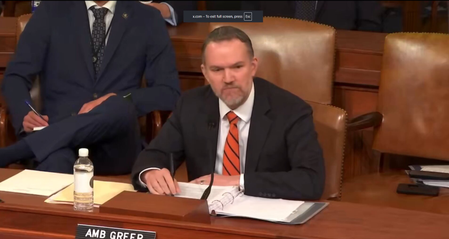
In the wake of President Donald Trump’s recent visit to Beijing, the Trump administration has indicated a shift in US-China trade and economic relations. US Trade Representative Jamieson Greer revealed plans for a more structured trade relationship with China, emphasizing the continuation of tariffs and restrictions on certain sectors. This development has garnered significant attention from global markets and trading partners, including India.
Greer highlighted the administration’s intention to establish a formal mechanism for managing trade disputes and economic interactions with China post the summit between President Trump and Chinese President Xi Jinping. The focus is on fostering structured engagement with China, particularly in non-sensitive goods like agricultural products, Boeing aircraft, medical devices, and consumer items.
As part of the new approach, Washington and Beijing have agreed to set up a “Board of Trade” and a “Board of Investment” aimed at addressing economic disputes and enhancing stability between the two largest economies globally. This move signifies a departure from the previous ad hoc methods that characterized their bilateral trade relations.
The discussions come amidst ongoing uncertainties surrounding tariffs, supply chains, and strategic competition between the US and China. While President Trump mentioned that tariffs were not discussed during the summit, Greer clarified that trade talks had commenced at lower levels before the leaders’ meeting. He emphasized the necessity of maintaining a certain level of tariffs to regulate imports while expecting increased market access from China.
Greer also noted positive steps taken by China, such as reinstating access for American exports like beef and poultry facilities and continuing purchases of American soybeans and Boeing aircraft. However, specific details regarding key agreements from the Trump-Xi summit remain pending finalization.
The summit coincided with global apprehensions regarding the Iran conflict and instability in the Strait of Hormuz, a crucial oil shipment route. Greer mentioned that discussions between Trump and Xi addressed the importance of keeping the Strait of Hormuz open and ensuring that China refrains from providing support to Iran.
The evolving trade dynamics between the US and China could have significant implications for India. Efforts by the US to reduce reliance on Chinese manufacturing and sensitive technologies have prompted multinational companies to diversify their supply chains, with countries like India and Vietnam emerging as alternative destinations.
