


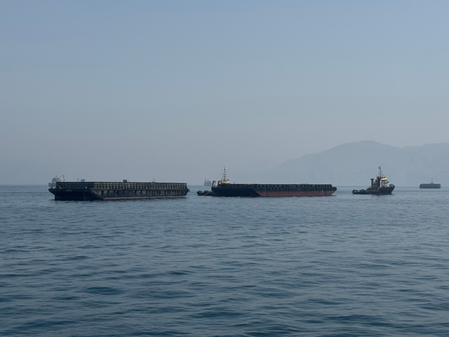
US President Donald Trump revealed plans for a new agreement with Iran to be signed on Sunday, with the immediate reopening of the Strait of Hormuz to international shipping upon its implementation. Trump emphasized that this deal aims to prevent Iran from acquiring nuclear weapons permanently, contrasting it with the 2015 nuclear agreement negotiated by former President Barack Obama. He stated that Iran has abandoned its pursuit of nuclear weapons, ensuring they will not obtain them through any means.
The President’s statement signals progress in negotiations between the US and Iran following months of diplomatic efforts and regional tensions. Trump’s mention of the Strait of Hormuz holds significance for global markets, as the waterway is crucial for energy transit, especially for crude oil and liquefied natural gas trade. Countries like India, a major crude oil importer, closely monitor developments in the Gulf and the Strait of Hormuz due to their impact on energy security and shipping expenses.
In a bid to differentiate the new agreement from the previous one, Trump highlighted that there would be no financial transactions involved, unlike the substantial payments made under the Obama administration. He also outlined plans for the removal and destruction of any remaining nuclear material in Iran at an appropriate time, emphasizing the use of advanced military capabilities for this purpose. Trump expressed optimism about future relations with Iran and the broader Middle East, while cautioning that the US has alternative options if diplomatic efforts fail.
Amid these developments, a social media post attributed to Pakistan Prime Minister Shehbaz Sharif hinted at an imminent peace agreement. The post suggested that finalization of the peace deal was expected within 24 hours, with preparations underway for its electronic signing. Pakistan acknowledged the roles of the United States and Iran in the negotiations, signaling a potential breakthrough in peace efforts.
