


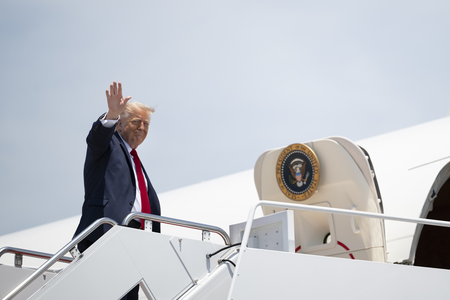
US President Donald Trump has arrived in France for the Group of Seven Summit with a potentially groundbreaking agreement with Iran. The deal, which aims to reopen the Strait of Hormuz and ease tensions, is set to be a focal point of discussions among G7 leaders. Despite the announcement of the agreement, many details remain undisclosed, leading to a sense of anticipation and uncertainty among allied governments.
During his three-day visit to Evian-les-Bains, France, Trump is scheduled to engage with various world leaders, including Prime Minister Narendra Modi. While the summit’s official agenda covers technology, trade, and economic matters, the spotlight has shifted to the evolving US-Iran relationship and its wider implications on global security and energy dynamics. The preliminary framework of the agreement includes a proposed 60-day ceasefire and talks aimed at a more comprehensive resolution.
European leaders have largely embraced the initial breakthrough, with countries like France, Germany, Italy, and the United Kingdom advocating for a swift return to normal commercial activities in the Strait of Hormuz. However, critical issues such as sanctions relief and Iran’s nuclear program’s future have been deferred for future negotiations. The agreement’s public release is pending, adding to the ongoing uncertainties surrounding its full scope and impact.
Amidst the optimism, concerns persist, particularly regarding the agreement’s implementation and its broader implications for regional stability. Trump’s ability to rally support from allies for safe passage through the Strait of Hormuz and to address Iran’s nuclear activities remains a key challenge. Additionally, commercial shipping entities are seeking assurances of a secure environment before resuming full operations in the region.
The G7 Summit marks a significant juncture for Trump’s foreign policy approach, emphasizing a blend of military pressure and diplomatic engagement. The president views the agreement as a testament to the effectiveness of this strategy, highlighting the potential for a toll-free Strait of Hormuz in the future. The G7, originally formed to coordinate economic policies, has increasingly evolved to address pressing global crises, reflecting the changing dynamics of international relations.
