


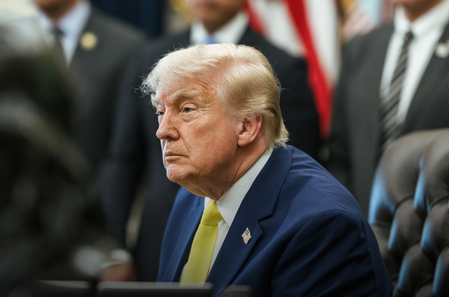
US President Donald Trump has signed an executive order to bolster US defence supply chains by limiting waivers for foreign critical materials, enhancing supply chain oversight, and promoting the use of domestic and allied suppliers for military production. The order aims to reduce reliance on foreign sources for crucial materials and components in advanced weapons systems. It mandates stricter conditions for granting waivers to procure restricted materials from certain countries, requiring contractors to outline plans for transitioning to compliant domestic or allied sources when waivers are approved.
The executive order also instructs the Department of War to establish regulations mandating prime contractors and subcontractors to map out critical defence supply chains from raw materials to final military products. This move is intended to identify weaknesses, bottlenecks, and potential foreign influence within the defence industrial base. Senior Counsellor for Trade and Manufacturing Peter Navarro, announcing the measure, emphasized the importance of secure supply chains in maintaining the strength of the US military.
Navarro highlighted the need to uncover vulnerabilities in lower-tier suppliers that may not be readily apparent to the government. The order encourages defence contractors to seek out new domestic sources for critical minerals, materials, and components, while streamlining the approval process by removing regulatory obstacles. Contractors relying on unreliable suppliers must swiftly identify alternative sources to meet legal and operational requirements. Navarro framed the initiative as crucial for national security readiness rather than a bureaucratic exercise.
The administration’s focus on securing supply chains extends beyond concerns about China, with Navarro emphasizing the broader global dependencies that need to be addressed. The executive order builds upon previous actions taken to modernize defence acquisitions, boost domestic critical mineral production, reform military procurement processes, and negotiate agreements related to critical mineral imports affecting national security.
