


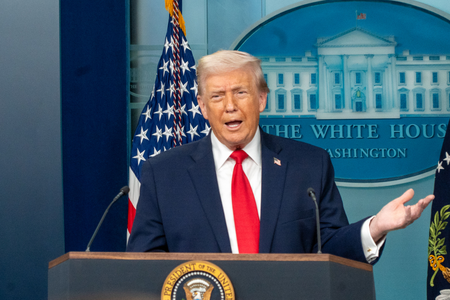
US President Donald Trump called on Iran to engage in negotiations swiftly as a significant American naval presence moved towards the region, escalating pressure on Tehran amid heightened tensions in the Middle East. Trump, in a radio interview, mentioned a substantial armada heading to the area, emphasizing its strength and size compared to previous deployments. He expressed hope that military action would not be necessary, stating, “Hopefully, we won’t have to use it.”
Trump reiterated his message on his Truth Social platform, highlighting the rapid and forceful movement of a large fleet, led by the aircraft carrier Abraham Lincoln, towards Iran. He emphasized the readiness of the force to fulfill its mission promptly, even with force if required, while urging Iran to come to the table for negotiations without delay. The President warned of severe consequences if negotiations failed, referencing past military actions and stressing the urgency of the situation.
In the radio interview, Trump linked the naval deployment to broader regional security concerns, particularly regarding Israel, citing Iran’s threats towards the country. He credited US support for deterring escalation and mentioned recent tensions that led to temporary airspace closures by Israel. Trump also mentioned successful efforts in securing the return of hostages and the deceased, underscoring the administration’s involvement in the conflict and its commitment to resolving issues thought to be insurmountable.
Describing the Iran situation as part of a comprehensive foreign policy strategy focused on military strength and direct talks, Trump emphasized the use of US power to prevent conflicts rather than incite them. He positioned the deployment within the context of global conflicts, including the situation in Ukraine, advocating for dialogue as a means to end bloodshed. Trump’s approach to foreign policy centers on pressure and deterrence to push for negotiations, with a clear message to Iran: negotiate now or face more severe repercussions.
